

First Supply Uses Climbing Robots to Rethink Warehouse Efficiency
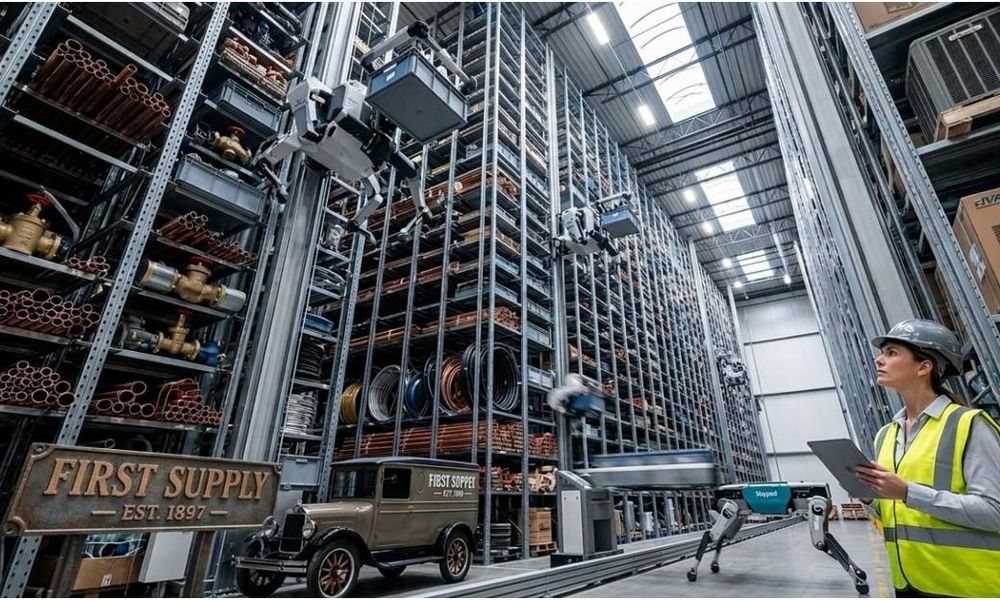
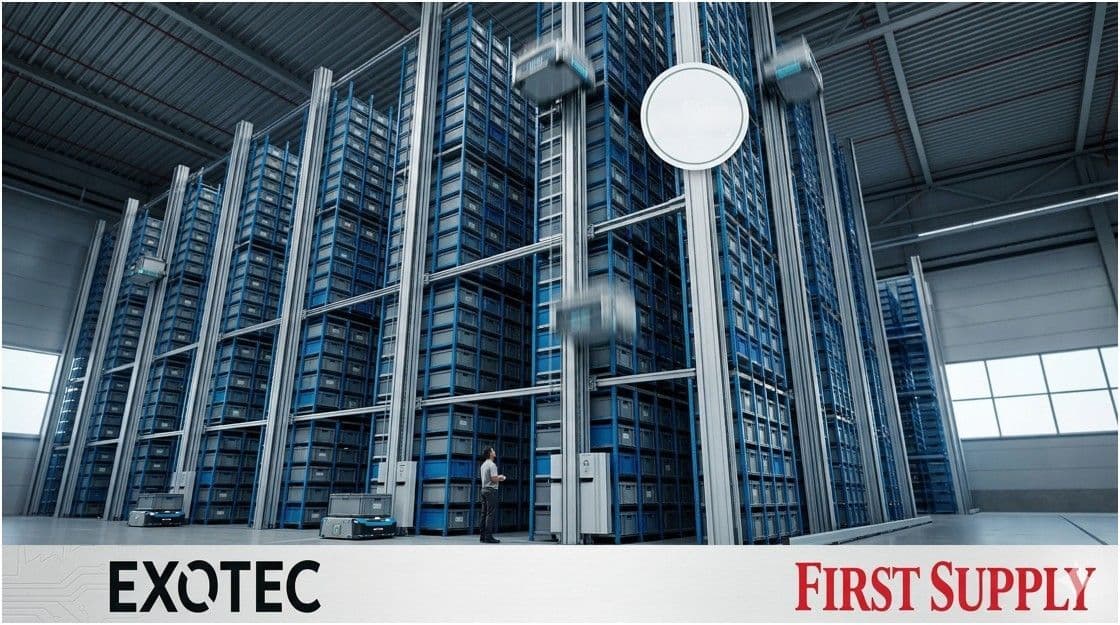
First Supply, a long-running HVAC and plumbing distributor, has deployed Exotec’s Skypod system to automate parts of its warehouse operation. Instead of relying on workers to travel across long aisles and retrieve inventory manually, the system brings product bins to stationary picking points through robots that move across the floor and climb high racking.
The change is about more than automation for its own sake. It reflects a practical response to the pressures distributors face when they need to improve fulfillment speed without expanding their footprint or overloading labor-intensive workflows.
Why Vertical Storage Changes the Equation
In a traditional warehouse, a large share of time is spent walking between product locations. Systems like Skypod reduce that movement by sending robots to retrieve items and deliver them directly to picking stations.
That shift matters because it changes how space is used. When robots can climb tall racks safely and quickly, a distributor can store more inventory vertically instead of depending as heavily on additional floor space. For companies managing a wide mix of product sizes and turnover rates, this can improve both storage density and order flow.
Why Travel Time Matters
Reducing travel time is one of the clearest operational benefits in automated distribution environments. When workers stay in more fixed positions, and the system handles retrieval, fulfillment can become faster, more consistent, and easier to scale during busy periods.
How the Skypod System Works
The Skypod model combines robotics, racking, and software into one coordinated warehouse system. At a practical level, the setup depends on four main elements:
- The robots: mobile units that move horizontally and climb vertically to retrieve stored bins
- The racking: tall storage structures designed to support robot access and higher inventory density
- The software: orchestration tools that manage robot movement, product placement, and retrieval priorities
- The rollout model: a setup that can often be installed and expanded with less disruption than heavier fixed automation systems
What the Software Optimizes
The software layer matters because the system does more than move products. It also helps determine where inventory should sit based on demand, speed of access, and order patterns. That allows high-velocity products to remain easier to retrieve while the broader storage layout stays more efficient over time.
Why This Matters for Industrial Distributors
For industrial distributors, the advantage is straightforward. Faster retrieval, better use of vertical space, and reduced dependence on constant walking can all improve how orders move through the warehouse.
That does not mean automation replaces every warehouse role. It means the operating model changes. Instead of asking workers to cover more ground, the system is designed to reduce repetitive movement and support a more controlled fulfillment process.
Where the Georgia Angle Fits
This kind of deployment also connects with Georgia’s broader logistics and industrial technology landscape. The state remains an important environment for warehouse operations, supply chain movement, and automation testing, especially as companies look for ways to improve throughput without taking on unnecessary real estate expansion.
That makes stories like this relevant beyond one company. They show how distribution businesses are adapting to the same pressures shaping logistics decisions across the region: labor constraints, denser inventory needs, and rising expectations for faster fulfillment.
What Legacy Companies Can Take From It
First Supply’s move is notable not simply because the company is old, but because it shows how legacy distributors can update operations without abandoning their core business model. The real lesson is that modernization does not always mean building a larger footprint. In many cases, it means making existing facilities work harder and more efficiently.
As more distributors face pressure to improve speed and storage performance at the same time, systems like this may become less of a differentiator and more of a practical next step.
Explore more on the Peach State Tech blog for deeper coverage of the Georgia companies, AI systems, and infrastructure shifts reshaping how business gets done.