


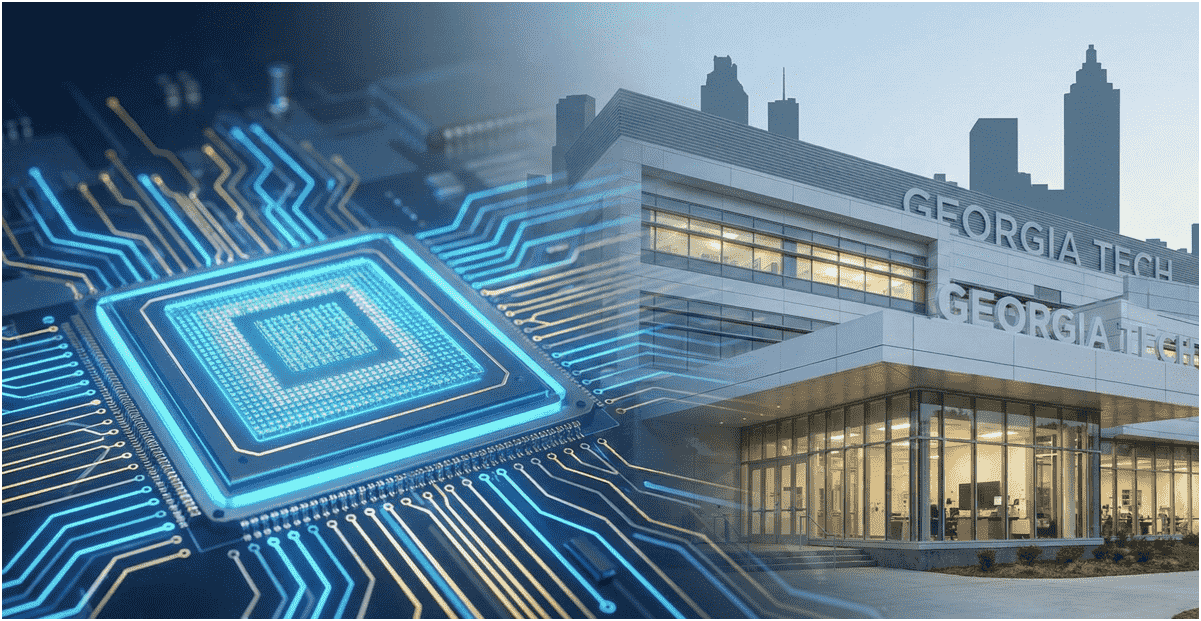
Georgia Places Its Bet On AI Innovation
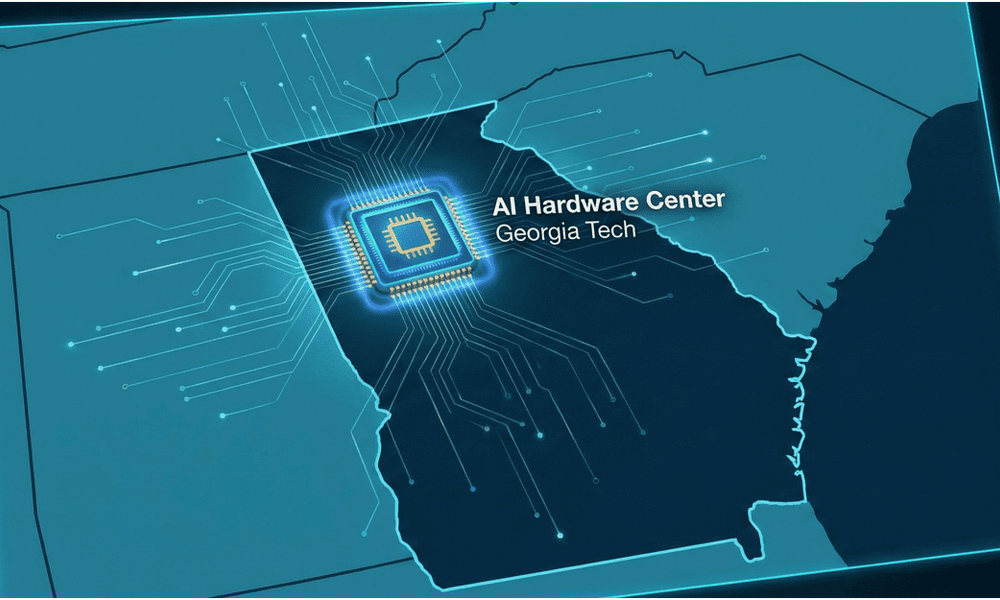
Atlanta is making a gamble on the future of artificial intelligence. The prediction? The developmental heart of AI is shifting from Silicon Valley to North Avenue. With ongoing developments in Georgia Institute of Technology's vast AI Hardware Center, the state is poised to play a crucial role in shaping the future of national semiconductor technologies.
Established through a $100+ million public-private partnership, Georgia Tech's 64,000-square-foot AI Hardware Center became fully operational by the close of 2024. The center's existence signifies more than a nod to research expansion; instead, it marks an ambitious industrial strategy for Georgia.
A Strategy Fueled By Collaboration
Partnership lies at the core of the AI Hardware Center's mission. With backing from influential firms such as Intel and Keysight, along with various defense contractors, the facility is working to address the persistent problem in AI development: energy-hungry, high-cost chips. Through specialized, efficient, and domain-specific AI hardware, Georgia aims to secure the associated jobs, startups, and supply-chain infrastructure.
As Dr. Vivek Sarkar, the chair of Georgia Tech’s School of Computer Science, puts it: “If Georgia can own part of that stack, we’re no longer just a customer of the AI revolution - we’re a producer.”
Georgia’s Evolving Tech Landscape
Traditionally, Georgia has built its tech reputation on fintech in Atlanta, logistics in Savannah, and a widespread software ecosystem. Semiconductors and deep hardware research and development were thought of as the playground of California, Texas, or Taiwan.
That narrative, though, is now being rewritten.
Enriched by the federal CHIPS and Science Act and strategic investments made by the State of Georgia, the AI Hardware Center has become the epicenter of a broader effort to localize the semiconductor value chain. Rather than making an impossible leap to becoming a Taiwan overnight, leaders are crafting specialized niches.
The AI Lab: A Junction of AI and Application
Step into the AI Hardware Center, and the commitment to the mission is immediately evident. Clean rooms, racks of testing platforms, arrays of oscilloscopes, and analyzers all crew together to answer a single question: How can AI become faster, cheaper, more secure, and significantly more energy-efficient?
Three main focus areas stand out: edge AI chips for logistics and manufacturing, reliable AI hardware for defense and critical infrastructure, and AI for grid augmentation. Startup companies extracting benefit from this AI evolution are also emerging, like Peachtree Photonics and Boxcar Logic.
A Workforce Fit For AI Hardware Dominance
For Georgia to position herself as an AI-hardware hub, she needs an inclusive workforce, from PhDs in Midtown to technicians in Columbus and manufacturing engineers in Gwinnett, primed to build, test, and maintain advanced hardware. State and academic institutions are bridging the gaps, creating a “semiconductor ladder”. This ladder ranges from technical programs in community colleges, various specializations in four-year universities, and K-12 initiatives partnered with Georgia Tech.
Calculated Risks and Potential Rewards
This bold gamble doesn't come without potential perils. Global semiconductor markets can be volatile, and AI hype has some history of outpacing its practical deployment. Furthermore, competing states like North Carolina and Texas are also vying for the same capital and talent. But Georgia is armed with two significant strategic advantages - a diversified, tech-hungry customer base and the AI Hardware Center functioning as a research engine and a bridge to commercial application.
Should the strategy succeed, Georgia will become more than a welcoming environment for tech businesses. Rather, she will become a global hub in the infrastructure of global AI. Preserving the power during a heatwave in downtown Atlanta, or securing a military network near Augusta, Georgia, will be there, the intelligence behind it born in Georgia’s lab, etched into a Georgia-tested chip.
Just as the state is known for its rich soil that nurtures growth, Georgia may soon find its future shaped by its silicon.