


Savannah's Unseen Tech Revolution Taking Flight
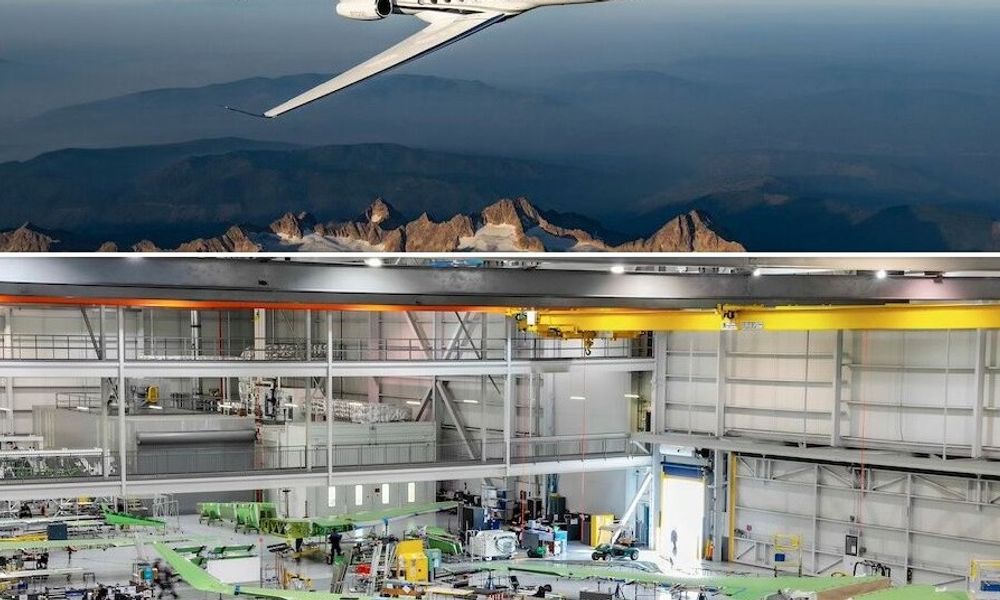
Beneath the calm exterior of Savannah’s west side, the landscape is changing faster than the eye can keep up. As the marshlands give way to runways, an untold narrative in Georgia’s technology sector is taking shape at Gulfstream Aerospace. More than a manufacturer of elite private jets, Gulfstream has silently been modifying its internal structures, transforming into an ingeniously technologically-advanced hub in the heart of Savannah.
The Reinvention of a Legacy Manufacturer
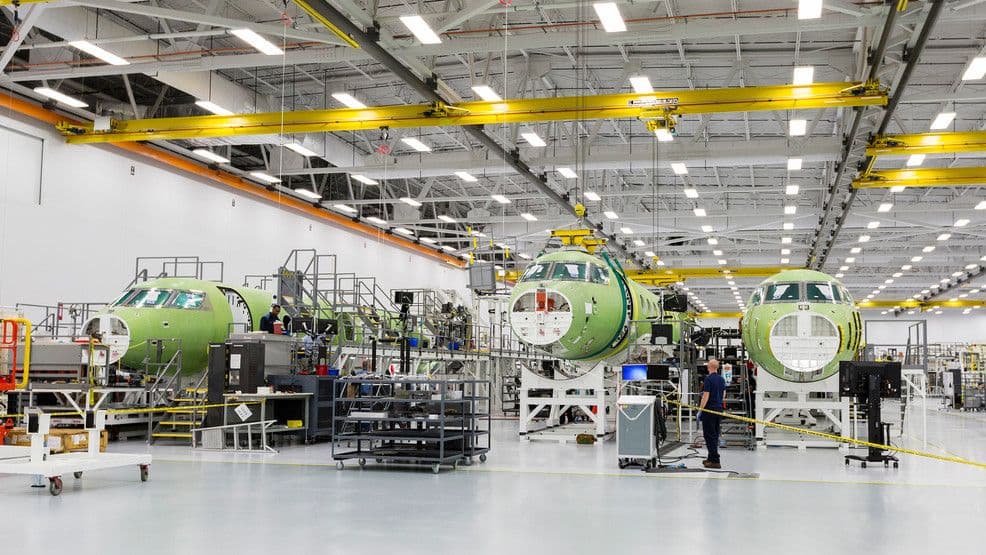
No longer just an aircraft manufacturer, Gulfstream Aerospace has successfully recast itself as a data, software, and advanced materials company. This transformation is not primarily about capturing funding, as is typical of nascent Atlanta tech start-ups. It's about a legendary manufacturer delving into the deep-tech waters without relinquishing its "aerospace" roots. The transition isn't a façade. The company's enormous hangars portray an accurate image of the modification. Known as one of the largest tech employers in Georgia by revenue and engineering workforce, Gulfstream’s assembly lines for the G700 and G800 emit radiations of technological advancement. The company employs a substantial team of software developers, systems engineers, and data scientists, side by side with machinists and composite technicians.
Gulfstream: Pioneering Technological Innovation in Aviation
Today's Gulfstream is a realm of virtual simulations, augmented-reality work instructions, digitally cloned aircraft systems, and proprietary flight-deck software. The latter employs an amalgamation of radar, satellite, terrain, and traffic data to provide a pilot’s-eye view of the world. Beyond the polished exteriors of Gulfstream's G700 and G800, a high-tech flight deck that aids in gathering real-time data paints a more accurate picture of what these aircraft represent. The long-range business jets are now data platforms that rely on features such as predictive maintenance analytics and fly-by-wire flight controls, which run on triple- or quadruple-redundant computing architectures. As an Engineering Manager at Gulfstream remarked, “Our aircraft used to be defined by range and speed. Now they're defined just as much by software architecture, cybersecurity posture, and data strategy.”
Spillover of Gulfstream’s Transformation for Georgia
The ripple effect of Gulfstream's technological revolution extends to Georgia’s education. To meet the demand for advanced skills, Gulfstream has fortified partnerships with the likes of Georgia Tech for aerospace engineering, avionics, materials science, and embedded systems. Moreover, reaching out to the Savannah College of Art and Design (SCAD) ensures a steady supply of designers skilled at cabin UX, industrial design, and human-machine interfaces. Georgia Southern University and Savannah Technical College provide an indigenous pipeline in mechatronics, advanced manufacturing, and software. As part of its evolution, Gulfstream has strategically reinvented its narrative to compete with major tech poles like Austin and Seattle on the quality of life. Engineers interviewed were quick to point out the appeal of Savannah with its shorter commutes and lower housing costs, growing creative and food scene enlivened by SCAD and tourism, and the tangible satisfaction of crafting something that "you can physically walk onto and watch take off."
Gulfstreams Role in Shaping Georgia’s Tech Economy
Gulfstream’s transformation signifies a crucial shift in Georgia’s tech economy and how we define “industrial company” and “tech company.” With the modern digital infrastructure requirements like robust cybersecurity, cloud, and edge computing architectures, and data governance and privacy frameworks, it is clear that the expertise being built in Savannah is not bound by niche aviation issues. Looking forward, Gulfstream's tech story may converge more directly with climate and energy innovation, which are two sectors Georgia is already heavily invested in. With the aviation industry being pressured to decarbonize, Gulfstream is looking towards adopting more radical options like hybrid-electric propulsion, hydrogen, and ultra-efficient airframes that are as much a software problem as they are mechanical. For readers in Georgia, from engineers and students to founders and policymakers, the message is potent: One does not necessarily need to exit the state or even the coast to encounter the edge of software, AI, and systems engineering. Indeed, through the lens of Gulfstream, we see our local factories, hangars, and research labs as bustling hubs of hidden technical expertise.