
How AI Can Be Used to Detect Fraud in Healthcare Claims
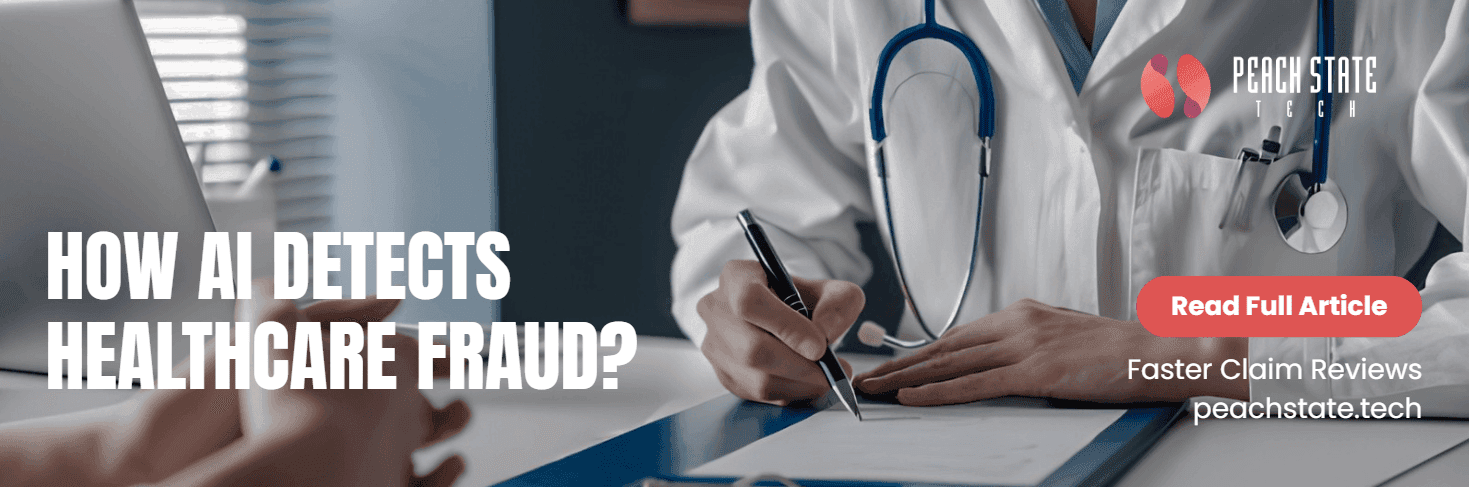
AI can detect healthcare fraud by reviewing claims data, billing codes, provider behavior, patient records, and payment patterns. The system looks for activity that does not match normal behavior.
Traditional fraud detection tools often rely on fixed rules. A system may flag a claim because it exceeds a billing limit, repeats a service, or matches a known red flag. That approach can catch simple problems, but it can miss schemes that change over time.
AI in healthcare fraud detection adds a stronger layer of review. Machine learning can study large data sets and find patterns that a manual team may not see quickly. The U.S. Department of Justice says its Health Care Fraud Unit uses advanced data analytics and algorithmic methods to identify emerging healthcare fraud schemes.
Why Healthcare Fraud Creates Serious Risk
Healthcare fraud creates financial, operational, and ethical problems. It can waste money, increase administrative costs, delay valid claims, and damage trust in the healthcare system.
Fraud can come from providers, employees, patients, vendors, or outside criminal groups. Some schemes look obvious. Others hide inside normal billing activity. That is why healthcare organizations need tools that can review large volumes of data without depending only on manual checks.
Common healthcare fraud schemes include:
- Phantom billing for services that were never provided
- Duplicate claims for the same service
- Upcoding that uses a higher-paying billing code
- Identity misuse involving stolen patient information
- False claims connected to unnecessary services or altered records
AI healthcare fraud detection tools can help because these schemes often leave data trails. When billing codes, patient records, provider activity, or claim details do not match, AI can flag the claim for review.
Common Fraud Schemes AI Can Help Detect
AI works best when fraud leaves patterns in data. Claims, codes, records, payments, and access activity can show where something does not match normal behavior. These signals do not always prove fraud. They show reviewers where to look first. That makes AI useful for claims review, billing oversight, and compliance teams that need faster ways to sort high-risk activity.
This is also why AI governance has become a competitive issue for Georgia organizations. Healthcare teams need AI systems that support speed, accuracy, privacy, and accountability at the same time.
How Machine Learning Finds Suspicious Claims
Machine learning helps healthcare teams find suspicious claims by learning what normal billing behavior looks like. It can review provider history, claim timing, service combinations, patient records, and payment activity.
For example, a provider may suddenly bill far more of one procedure than similar providers. A patient record may show care in locations that do not make sense. A claim may include a billing code that does not match the medical record.
These signs do not always prove fraud. They give reviewers a stronger starting point. Machine learning can help investigators identify patterns that match overbilling or suspicious provider behavior while giving them clearer signals for review.
How Natural Language Processing Reviews Claim Details
Not every warning sign appears in a billing code. Some signs appear in clinical notes, claim narratives, appeal documents, and other written records. Natural language processing helps AI read and compare that text. It can check whether the written record supports the claim. For example, the medical note may describe a basic service, while the billing code asks for payment for a more complex procedure.
This makes AI in healthcare fraud detection more useful. The system does not only review numbers. It can also review written details and show investigators where the claim and the record do not align.
How AI Flags Billing Abuse
Billing abuse often follows patterns. AI can review those patterns across providers, patients, locations, and time periods.
AI can help flag:
- Upcoding when the billing code does not match the service
- Phantom billing when records do not support the service
- Duplicate claims for the same procedure
- Sudden billing changes without a clear reason
- Claims that do not match treatment records
Human review still matters. A legitimate claim can look unusual for a valid clinical reason. AI should help teams find risk faster, but people should review the evidence before they make final decisions.
How AI Detects Identity Misuse
Healthcare data has high value. Criminals can use stolen patient information to submit false claims, access services, or change account details.
AI can help detect identity misuse by reviewing access behavior, location patterns, account changes, and claim history. A system may flag activity when a patient’s information appears in unusual claims or when account behavior does not match past use.
This matters for patient safety. False claims and stolen identities can create inaccurate records. Those records can follow patients into future care settings if organizations do not catch the problem early.
Real-World Use of AI in Healthcare Fraud Detection
Public agencies and healthcare organizations already use AI and advanced analytics in fraud prevention, payment integrity, and claims review.
CMS launched the WISeR model to test enhanced technologies for selected Medicare services. CMS says providers and suppliers in selected regions can submit prior authorization requests or go through post-service, pre-payment review under the model.
The DOJ also announced a 2026 national healthcare fraud takedown involving 455 defendants and more than $6.5 billion in alleged false claims. The DOJ described the action as a major healthcare fraud enforcement effort across federal and state partners.
These examples show a clear trend. Government agencies and healthcare organizations now use data-driven tools to find suspicious activity faster. AI does not replace investigators. It helps them focus on the highest-risk claims and patterns.
Benefits of AI over Traditional Fraud Detection
AI gives healthcare organizations four main benefits: speed, scale, adaptability, and stronger pattern recognition.
Traditional systems often catch known problems. AI can review more data and adjust when fraud tactics change. This helps teams move from delayed review to earlier detection.
AI can also reduce false positives when teams use it well. A fixed rule may flag every unusual charge. A machine learning system can review the charge with provider history, patient context, claim timing, and related billing behavior. That fuller view helps teams separate normal variation from possible fraud.
For companies that sell AI tools into healthcare or other regulated industries, these benefits also connect to enterprise procurement readiness. Buyers need proof that a product can handle security, compliance, integration, and operational risk before they adopt it.
Privacy, Compliance, and Human Oversight
Healthcare fraud detection tools often process sensitive information. These systems may review billing records, patient identifiers, clinical notes, and claim histories. That means privacy and compliance must stay central.
Healthcare organizations need access controls, audit trails, vendor oversight, data security, and HIPAA-aligned processes. HHS explains that the HIPAA Privacy Rule sets standards for how protected health information can be used and disclosed.
Human oversight also protects fairness. AI can flag suspicious claims, but people should review the context and make final decisions. This is especially important when a decision may affect patient access, provider payment, or enforcement action.
Georgia’s broader AI policy conversation points in the same direction. Georgia AI governance efforts show how clear policies and oversight can help public-sector teams adopt AI while protecting sensitive information.
Challenges of Using AI for Fraud Prevention
AI adoption can create real challenges for healthcare organizations. Teams may need new software, cleaner data, stronger integrations, and staff training.
Cost can also create a barrier. Smaller organizations may not have the same resources as large insurers, hospitals, or public agencies. AI tools also need monitoring because models can become less accurate when billing patterns or fraud tactics change.
Transparency matters as well. Reviewers need to understand why a system flagged a claim. If the system cannot explain the reason, teams may struggle to trust the result.
That workforce challenge is not limited to healthcare. Across Georgia, companies need stronger AI literacy as artificial intelligence becomes part of daily business operations. Peach State Tech has also covered why Georgia teams need better AI fluency to support enterprise AI deployment.
What This Means for Georgia’s Tech Ecosystem
AI fraud detection shows how practical AI can improve real operations. Healthcare, insurance, compliance, and enterprise procurement teams can use AI to protect resources and strengthen oversight.
This topic also matters for Georgia companies exploring ai consulting for businesses atlanta, ai consulting georgia, or an ai consulting firm georgia. Fraud detection gives leaders a clear example of AI moving beyond experimentation and into measurable business value.
As Georgia’s innovation economy grows through events such as venture atlanta, healthcare technology companies have a chance to build better tools for compliance, claims review, and fraud prevention.
Key Takeaway
How AI can be used to detect fraud in healthcare comes down to faster claim review, stronger pattern recognition, and better use of healthcare data. AI can help detect upcoding, phantom billing, duplicate claims, identity misuse, and suspicious billing behavior before losses grow.
If your company is building AI tools for healthcare, compliance, enterprise procurement, or fraud prevention, Peach State Tech can help you strengthen visibility across Georgia’s growing innovation ecosystem. Get in touch to share your story with the founders, investors, and technology leaders shaping what comes next.
Frequently Asked Questions
Can AI Reduce False Positives in Healthcare Fraud Detection?
Yes. AI can reduce false positives by reviewing more context around a claim. It can compare billing details, provider history, patient records, and related claim activity before it flags a case for review.
How Do Machine Learning Algorithms Help Find Fraudulent Claims?
Machine learning algorithms compare current claims with historical patterns. They can flag unusual billing changes, duplicate activity, mismatched records, and behavior that may suggest fraud.
What Types of Healthcare Fraud Can AI Detect?
AI can help detect upcoding, phantom billing, duplicate claims, identity misuse, false claims, and suspicious provider billing patterns.
Does AI Replace Human Fraud Investigators?
No. AI supports investigators by helping them find suspicious activity faster. Human reviewers still need to assess the evidence, understand the context, and make final decisions.
Why Does AI Healthcare Fraud Detection Matter?
AI healthcare fraud detection matters because it helps organizations protect money, reduce waste, improve compliance, and preserve trust in healthcare systems.