


Why the ACM AI Leadership Summit Atlanta Matters
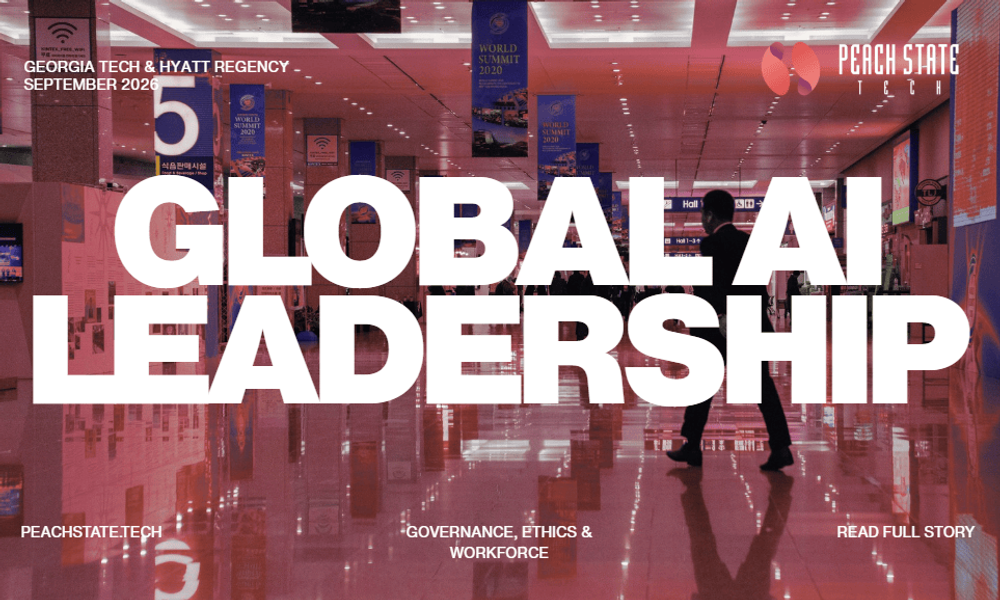
The ACM AI Leadership Summit Atlanta provides a global forum for experts to discuss the next stage of artificial intelligence. The program brings together leaders from academia, government, and industry to exchange ideas on research, innovation, and the responsible use of AI. The event also encourages international cooperation as organizations work toward common standards for AI development and deployment.
Georgia Tech's Role in the Summit
Hosted with significant support from the Georgia Tech College of Computing, the summit features distinguished speakers, including A.M. Turing Award Laureates Andrew Barto and Yann LeCun. Faculty from the School of Interactive Computing and the School of Computing are helping organize the conference while supporting research that advances computer science, machine learning, and intelligent decision systems.
Key AI Technologies in Focus
Artificial intelligence continues to expand across many industries. Modern AI systems now support business operations, scientific research, healthcare, finance, manufacturing, and public services. Many organizations are also adopting generative AI to improve productivity, automate routine work, and assist employees with complex tasks. As AI capabilities continue to mature, organizations must balance innovation with responsible planning throughout the entire AI lifecycle.
Several topics will receive significant attention throughout the summit.
- Frontier AI technologies and generative AI
- Autonomous systems and machine learning
- AI systems that support scientific research and enterprise operations
- Responsible use of AI across public and private organizations
- Computer science research from the Georgia Tech College of Computing
- Emerging business applications for AI across multiple industries
One major discussion area focuses on autonomous systems that can plan, reason, and complete tasks with limited human intervention. These systems depend on high-quality training data, reliable data sources, and continuous improvement throughout the AI lifecycle. Human oversight also remains essential to ensure that AI systems produce accurate, transparent, and accountable results.
Organizations continue to evaluate how these technologies can improve efficiency while reducing operational risk. Atlanta CTOs discuss agentic AI and how intelligent systems are beginning to manage multi-step workflows across both digital and physical environments.
Growing interest in enterprise AI also creates new opportunities for organizations seeking ai consulting for businesses atlanta, ai consulting georgia, or an ai consulting firm georgia. Enterprise leaders are looking beyond simple automation and toward long-term AI strategies that improve operations while supporting governance, compliance, and sustainable business growth.
AI Governance and Ethics Guide Responsible AI Adoption
Artificial intelligence creates new opportunities for organizations, but successful adoption depends on strong governance. One of the main themes of the summit is AI governance and ethics, which helps organizations build trustworthy AI systems while protecting people, data, and business operations.
Building an AI Governance Framework
Business leaders are placing greater focus on creating an AI governance framework that supports the entire AI lifecycle. An effective framework defines clear governance structures, assigns responsibilities, and establishes policies that guide the responsible use of AI. These measures help organizations meet regulatory requirements, prepare for future legislation such as the AI Act, and strengthen public confidence in AI technologies.
Managing AI Risks Across the Lifecycle
Risk management plays a central role in every stage of AI adoption. A structured AI risk management framework helps organizations identify potential issues before they affect business operations. Regular risk assessment activities allow teams to evaluate model performance, detect bias, reduce ethical risk, and address unintended consequences before AI systems are deployed at scale.
Several governance priorities will be discussed throughout the summit.
- AI governance frameworks that support responsible AI adoption
- AI risk management and continuous risk assessment
- Data governance, data privacy, and data protection
- Data security and access controls for enterprise AI
- Ethical considerations, ethical principles, and best practices
- Regulatory requirements and global AI policy development
Strengthening Data Governance and Ethical AI
Strong governance also depends on responsible data management. Organizations need effective data governance policies that protect sensitive information while maintaining high-quality training data. Good governance includes data privacy, data protection, data security, and appropriate access controls to reduce operational risk and improve compliance across AI initiatives.
Ethical decision-making extends beyond technology. Organizations must apply clear ethical principles throughout the AI lifecycle so that AI systems remain transparent, accountable, and aligned with business goals. These best practices help reduce ethical risk while supporting responsible innovation across different industries.
Enterprise leaders also recognize that governance supports long-term business value. Organizations statewide are discovering that treating AI governance as a competitive advantage in Georgia helps mitigate security vulnerabilities early. Effective governance enables organizations to deploy AI with greater confidence while protecting customers, employees, and critical business data.
Preparing for AI Workforce Transformation
Another major focus of the summit is AI workforce transformation. Artificial intelligence is changing how people work, make decisions, and solve problems across nearly every industry. Rather than replacing employees, many organizations are using AI to improve productivity, support decision-making, and automate repetitive tasks.
Preparing the workforce for these changes requires continued investment in education and technical training. Universities, employers, and public agencies all play an important role in helping professionals build practical AI skills while understanding responsible implementation. PATH advances AI workforce development in Georgia to prepare local teams for the digital economy.
Many organizations are also expanding AI into core business functions, including enterprise procurement, operations, customer service, cybersecurity, and strategic planning. As AI adoption grows, demand continues to increase for organizations that provide AI consulting for businesses in Atlanta, AI consulting Georgia, and AI consulting firm Georgia services. Strategic consulting helps businesses adopt AI technologies responsibly while aligning governance, security, and operational objectives with long-term business goals.
Georgia Tech Strengthens Atlanta's AI Leadership
The arrival of the summit reflects the continued growth of AI research at Georgia Tech. The Georgia Tech College of Computing plays a central role in organizing the event, while faculty from the School of Interactive Computing are helping lead discussions on emerging technologies and research. The College is also hosting a doctoral consortium that supports graduate students preparing to become future AI researchers and technology leaders.
Advancing AI Research and Innovation
Georgia Tech researchers continue to advance work in computer science, robotics, machine learning, natural language processing, computer vision, and cybersecurity. These research efforts help develop new AI technologies while encouraging collaboration between universities, government agencies, and private organizations. This collaborative academic effort benefits directly from the raw computing milestones happening inside Georgia Tech’s USD100M AI chip lab reshaping Atlanta’s innovation landscape.
Strengthening Georgia's Technology Ecosystem
The summit also highlights Atlanta's position as one of the fastest-growing technology ecosystems in the United States. Strong partnerships between higher education, startups, established companies, and public institutions continue to attract investment and encourage innovation across the region. Events such as Venture Atlanta further strengthen this ecosystem by connecting entrepreneurs, investors, and enterprise leaders who are accelerating the adoption of emerging technologies.
Organizations across Georgia continue to invest in artificial intelligence to improve operations, strengthen cybersecurity, enhance customer experiences, and support better business decisions. Many of these initiatives depend on collaboration between research institutions and industry, creating opportunities for responsible AI adoption that benefits both the public and private sectors.
Looking Ahead
The ACM AI Leadership Summit Atlanta highlights Georgia's growing influence in artificial intelligence research, responsible governance, and workforce development. By bringing together the Georgia Tech College of Computing, global researchers, policymakers, and business leaders, the summit supports meaningful discussions on the future of AI and the practical steps organizations can take to adopt these technologies responsibly.
As AI continues to evolve, organizations will need strong governance, effective risk management, and a skilled workforce to realize its full value. Peach State Tech helps innovative companies increase their visibility through founder stories, company spotlights, and industry coverage that reaches investors, business leaders, and technology professionals across the state.