

How AI in Georgia Classrooms Supports Teaching Workflows
The Georgia teacher AI audit shows that AI tools are now part of daily teaching tasks in many schools. Teachers use these systems to reduce repetitive work and improve classroom delivery. The most common use cases involve structured academic preparation and content creation.
Several core applications of AI in Georgia classrooms include:
- Lesson plans that support curriculum alignment
- Classroom materials that match student needs
- Instructional activities that improve student engagement
- Administrative tasks that reduce teacher workload
- Early support for learners who need extra help
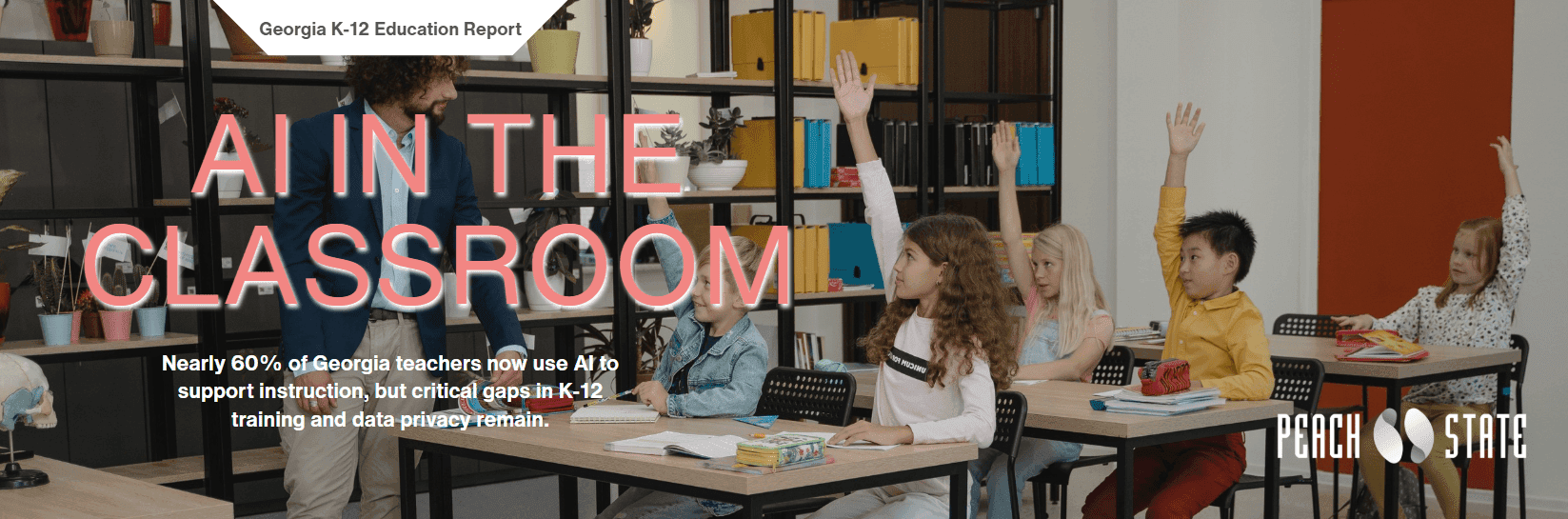
Teachers report that these tools improve efficiency and allow more focus on direct instruction. Many educators also use systems such as ChatGPT, Google Gemini, and Microsoft Copilot to generate classroom content and support lesson development.
Responsible Use and Student Literacy Challenges in Schools
The audit highlights concerns about responsible use of AI tools among students. In many schools, student access to generative tools is increasing faster than teacher guidance. This gap affects how students develop core skills such as literacy, problem solving, and critical thinking.
Student use of AI often raises questions about student data handling and academic integrity. Teachers report that some learners rely on automated outputs instead of completing assignments independently. This pattern creates challenges in measuring real understanding.
Concerns identified in the audit include:
- Responsible use of AI in student assignments
- Student data exposure through digital platforms
- Reduced literacy development from over-reliance on tools
- Uneven understanding of academic expectations across classrooms
- Increased dependence on automated content generation
Why K-12 AI Training and District Leadership Matter
The K-12 AI training gap is one of the most important findings in the Georgia teacher AI audit. Many educators report limited access to formal training programs. This creates uneven adoption of AI tools across schools.
District leaders play a central role in closing this gap. The audit shows that some districts provide structured support, while others offer little or no guidance. This difference affects how well teachers can use AI in the classroom.
Training gaps include differences in:
- District leader support for AI integration
- Teacher access to structured K-12 AI training
- Understanding of responsible use policies
- Knowledge of data privacy rules in school systems
- Ability to evaluate AI tools for classroom use
AI Governance in Education and Data Privacy Standards
The final section of the Georgia teacher AI audit focuses on AI governance in education. Schools are now required to think more seriously about rules, safety, and oversight when using digital systems.
A major concern involves data privacy, especially when AI tools process student data. Schools must ensure that sensitive information is protected and used correctly. This includes academic records, learning behavior, and classroom activity data.
Education leaders are now building stronger governance structures to manage AI use. These efforts focus on clear rules, safer technology use, and better accountability across school systems.
Key governance priorities include:
- Data privacy protection for student information
- Clear responsible use policies for teachers and students
- Strong oversight from district leaders
- Secure use of AI platforms in classroom environments
- Consistent governance structures across school systems
These governance systems ensure that AI supports education without replacing teacher judgment or weakening academic standards.
Future of AI in Georgia Classrooms
The Georgia teacher AI audit shows that AI adoption will continue to grow in schools. The use of AI in Georgia classrooms is already changing how teachers plan lessons, support learners, and manage workload.
Long-term success depends on stronger K-12 AI training, clear AI governance in education, and consistent support from district leadership. Schools that combine responsible use, literacy development, and strong data privacy systems will be better prepared for future learning environments.
Need help making sense of how AI is reshaping Georgia’s education system? The Georgia teacher AI audit shows a major shift in how schools are adopting technology, but success depends on clear strategy, training, and governance. Peach State Tech connects Georgia’s innovation ecosystem by spotlighting the companies, leaders, and ideas driving responsible AI adoption across the state.