

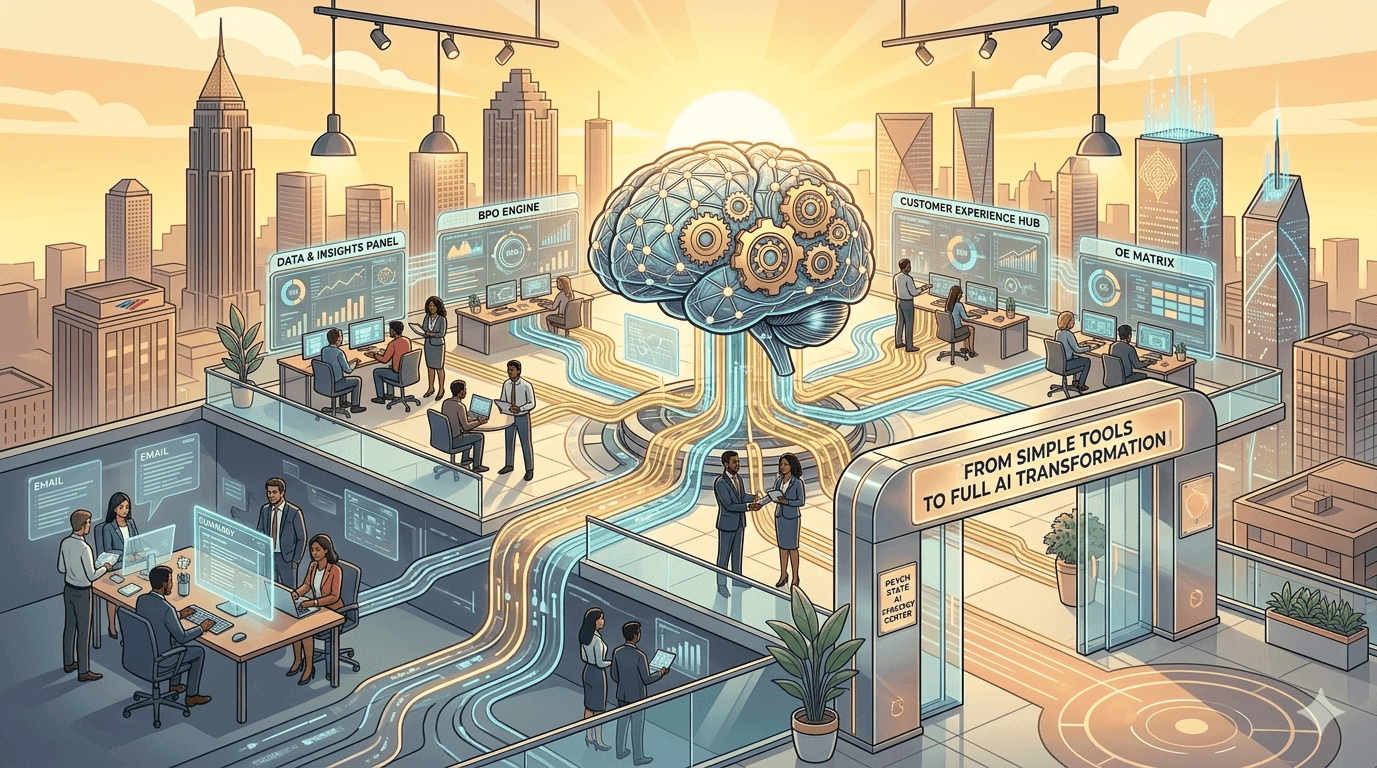
From Simple Tools to Full AI Transformation
At first, companies used artificial intelligence for small tasks like writing emails or summarizing reports, showing the early use of AI in the modern business world. These were simple repetitive tasks and routine tasks that only improved basic productivity.
Over time, businesses began using machine learning and other advanced technologies for deeper work across the organization. They now apply it to data analysis, improving business processes, enhancing customer experience, and increasing operational efficiency.
This change is called AI transformation, a key part of broader digital transformation, where AI becomes part of the company’s full operating model instead of just a tool. It now helps improve overall business operations, increase business value, and deliver stronger business outcomes.
The Rise of AI Workforce Architects
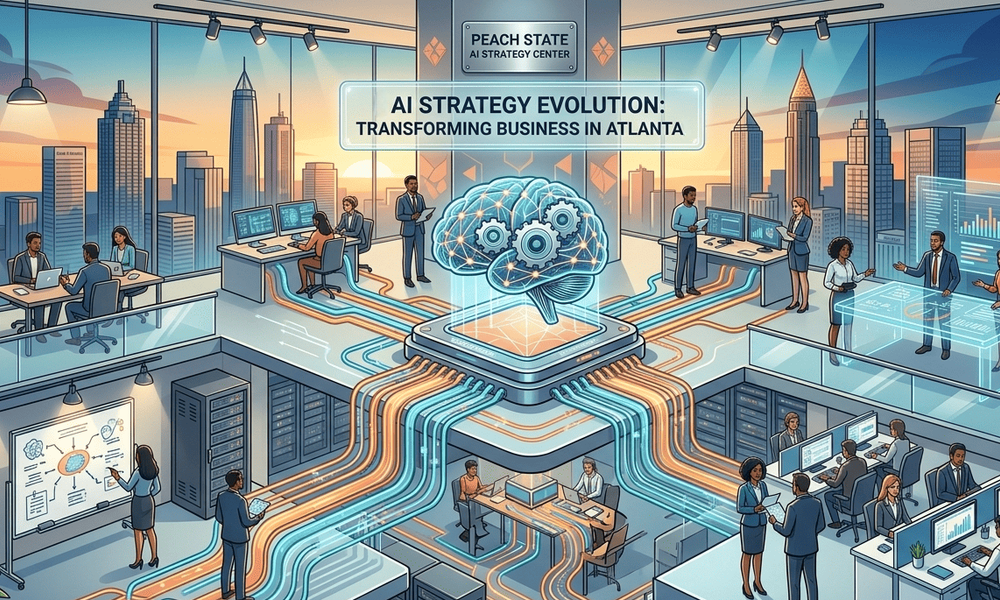
One of the biggest changes in this evolution is a new role called AI Workforce Architects. These are people who design how humans and AI work together. Instead of doing small tasks, they focus on design thinking, strategic thinking, and system design.
Their job includes:
- Designing AI systems for business use
- Improving data quality, data sets, and applying data science methods
- Making sure humans still guide important decisions
This role is important because it supports human-AI collaboration, where both humans and AI work together. In companies across Atlanta, this role is becoming more common as businesses move toward smarter systems.
How AI Changes Work and Skills
Artificial intelligence is changing the skills people need in the workplace. Many companies now invest in training programs, executive education, and executive education programs so workers can adapt to new systems and tools. This is a key part of AI strategy evolution, where businesses focus on improving both technology and people at the same time.
Instead of replacing workers, AI helps improve how work is done using natural language processing, large language models, AI models, and other AI capabilities. These tools help employees work faster, handle data more easily, and improve overall productivity, leading to stronger business impact and better results.
Even with these advancements, humans are still essential. Skills like critical thinking, emotional intelligence, and strong human capabilities are becoming even more important. This balance between people and technology supports long-term AI transformation and better workplace performance.
What Educational Resources Help Executives Stay Updated on AI Strategy Evolution
To keep up with rapid AI strategy evolution, many leaders turn to continuous learning. This includes executive education, online courses, and specialized executive education programs focused on AI and digital transformation.
These resources help leaders understand new tools, trends, and best practices. They also support better decision-making, allowing companies to stay competitive in a fast-changing business world.
How Design and Planning Are Changing?
Artificial intelligence is changing the architecture industry by making design and planning faster and more efficient. Architects now use intelligent systems and AI models to generate building ideas, test layouts, and explore different design options in less time.
With the help of generative AI, they can quickly create visual concepts and improve early-stage planning without starting from scratch each time.
AI also supports better decision-making by analyzing building performance, energy use, and structural efficiency. This helps architects improve the quality of their work while reducing repetitive tasks. However, human creativity is still very important. Final design decisions still depend on human intelligence, experience, and judgment.
AI only acts as a support tool that enhances the design process, not replaces it. This shows how AI transformation is reshaping creative industries through stronger human-AI collaboration.
Business Pressure and Smarter AI Use
Companies are under pressure from investors and stakeholders to improve results. Because of this, they use AI to gain a competitive edge.
Investors and leaders now look for successful AI transformation, not just AI experiments. They want businesses that use data analytics, data processing, and data analysis to improve decision-making and deliver stronger ROI. Some companies use small tests called pilot projects before scaling AI across the whole organization.
This helps reduce risk, improve results, and unlock new market opportunities and product innovation.
Which Industries Are Leading in AI Strategy Adoption Right Now
Several industries are moving faster than others in AI adoption in business. Sectors like finance, logistics, and health care are leading because they rely heavily on data and decision-making.
These industries use machine learning, predictive analytics, and intelligent systems to improve efficiency and reduce costs. Their strong focus on data and innovation makes it easier to scale AI across operations and gain a competitive edge.
Challenges in Building Enterprise AI Systems
Even though AI is growing fast, building enterprise AI systems is not easy. Many companies struggle when trying to scale AI adoption across the whole organization.
One of the biggest challenges is data quality management, especially when handling large and complex datasets. If the raw data is incomplete or incorrect, AI systems cannot deliver the right data, leading to weak results. Another major issue is lack of strong data governance, which is needed to manage, protect business information, and ensure regulatory compliance.
Other common challenges include:
- difficulty integrating AI into existing business processes
- lack of skilled workers like data scientists and engineers
- unclear operating models for AI use
Without proper planning, companies may only achieve small pilot results instead of full transformation.
Why Do Some AI Strategies Stall According to Recent Industry Data
Not all AI efforts succeed. Many strategies stall because companies lack the right foundation. Poor data quality management, unclear goals, and weak data governance often lead to failed results.
Another common issue is the lack of alignment between leadership and teams. Without a clear executive AI strategy program, businesses struggle to move from small pilot projects to full-scale implementation. This slows down progress and limits long-term impact.
How Companies Solve Enterprise AI Challenges
To overcome these problems, companies follow best practices and use structured approaches to improve successful AI transformation. They often start with small pilot projects before scaling. This helps reduce risk and improve learning.
Businesses also make a significant investment in:
- strong governance frameworks
- better training programs for employees
- clear change management strategies
- improved data analytics and systems
Most importantly, companies now focus on building intelligent systems instead of using AI as separate tools. This ensures AI is fully aligned with business goals and improves overall business value and competitive advantage.
The Future of Work with AI
The future of work is changing quickly in the digital age, where artificial intelligence, cloud computing, and the internet are reshaping how businesses operate. Jobs are not disappearing, but they are changing in how they are done. Instead of replacing people, AI is now working alongside humans. This creates a new system of human-AI collaboration, where both sides support each other.
AI is now used to handle data-heavy and repetitive tasks, especially through intelligent systems that process large amounts of information. At the same time, humans focus on human intelligence, such as decision-making, creativity, and strategic thinking. This balance helps companies improve their business strategy and achieve stronger business outcomes.
To make this transition successful, companies also need strong change management. This helps employees adapt smoothly to new tools and workflows as AI transformation continues across industries.
A New Business Era
The AI strategy evolution in Atlanta shows a clear change.
Companies are moving from basic AI use to full AI transformation powered by intelligent systems, strong data governance, and wide AI adoption. The ongoing AI strategy evolution shows that companies must now redesign how humans and AI work together to stay competitive.
As a media and marketing platform, we spotlight the founders, startups, and innovators driving AI adoption and building intelligent systems that shape the future of business. Explore more insights and stories at Peach State Tech to stay informed on how Georgia’s tech community is transforming with AI.