

Corporate AI Budgets Hit Reality Wall as Implementation Struggles Mount

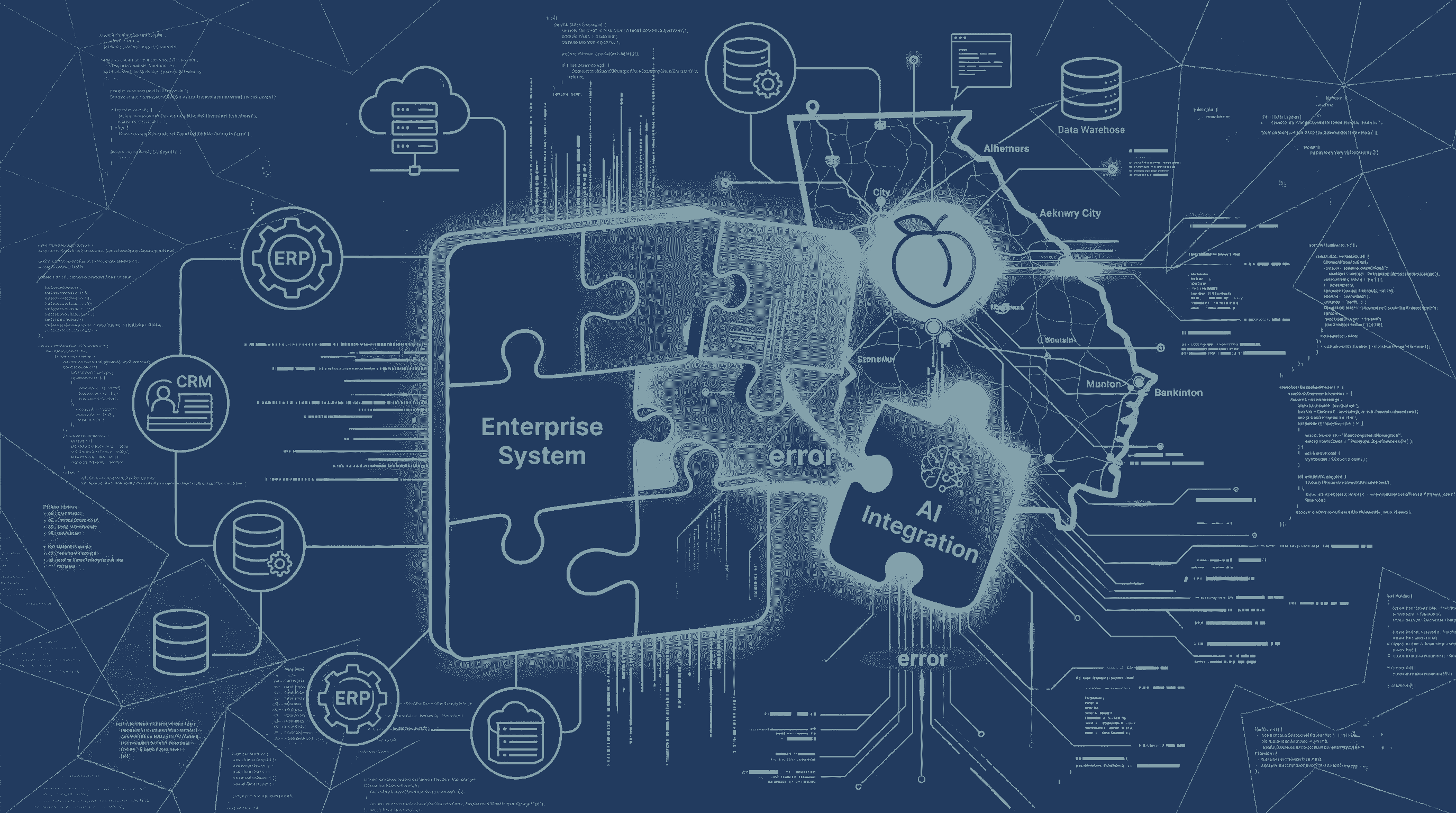
Corporate AI budgets are meeting a harder reality across Georgia’s business and tech landscape. Many companies that moved quickly from experimentation are now finding that production deployment requires more organizational readiness than early planning assumed.
The early push into enterprise AI was driven by urgency, competition, and the fear of being left behind. What many companies are discovering now is that scaling those systems requires far more than a promising proof of concept.
What looked manageable in testing becomes more difficult at scale. Teams often find that their data is inconsistent, their workflows are not ready for automation, and their review processes are not built for AI-assisted decisions.
The Trust Deficit and Data Bottlenecks
For many organizations, the central problem is not model availability but confidence in the system around it. Executives and stakeholders are often hesitant to fully deploy AI tools they cannot clearly verify or explain, especially when those outputs affect financial, operational, or supply chain decisions.
Poor data quality creates a second barrier. Many companies are still working with fragmented information spread across departments and platforms, which can make advanced AI systems unreliable before they ever reach full deployment.
What Trust Looks Like in Enterprise AI
Trust becomes easier to build when organizations define review ownership, document where data comes from, and make outputs easier to evaluate before action is taken.
What tends to derail enterprise AI deployment:
- Poor data quality across departments.
- Conflicting or siloed internal records.
- Limited visibility into how outputs are generated.
- Weak confidence from decision-makers responsible for final outcomes.
In Georgia, that pressure is pushing more companies toward narrower, implementation-focused solutions rather than broad AI promises.
Georgia's Tactical Response to AI Implementation Challenges
Local companies are increasingly responding with a more tactical mindset. We recently covered Perry Chaturvedi of Intelegencia, who emphasized that the focus is shifting away from the models themselves and toward the operational architecture required to make them useful in real business settings.
That same pattern appears in other Georgia-based efforts. Rather than chasing novelty alone, the stronger approach is becoming more focused: solve a specific problem, fit within existing systems, and make adoption easier for the teams expected to use the tool.
How Georgia Companies Are Narrowing the Scope
One practical response is to reduce the size of the problem being solved. A startup offering a one-click AI platform, for example, is not trying to rebuild an entire enterprise stack at once. It is trying to remove a layer of friction that often causes projects to stall before they reach meaningful adoption.
Organizations are no longer looking for AI that only sounds impressive in theory. They are looking for systems that can work within legacy infrastructure and produce results without creating more disruption than value.
The Complexity Gap: AI vs. Traditional IT
Traditional IT projects have long carried meaningful failure rates, but enterprise AI introduces a different type of complexity. In conventional software, the same input usually produces the same result. AI systems are less predictable, more dependent on data quality, and more sensitive to the workflow around them.
That difference is changing how companies think about rollout strategy. The old instinct to move fast and expand quickly is giving way to a more cautious approach centered on preparation, tighter deployment scope, and reviewable outcomes.
Why AI Rollouts Break More Easily Than Traditional IT Projects
AI projects are harder to stabilize because the model is only one part of the system. Data quality, human oversight, trust, and workflow design all influence whether deployment succeeds.
Why AI projects are harder than traditional IT rollouts:
- Outputs can vary even when the same process is repeated.
- Model behavior depends heavily on data quality.
- Human review and accountability matter more than in deterministic software.
- Broad deployment creates more room for failure across teams and systems.
For Georgia companies, that has increased interest in more contained deployment paths. Huper, for example, has focused on communication-specific problems rather than trying to solve enterprise-wide coordination all at once.
The Cost of Stalling
When AI projects stall, the cost is not limited to delayed internal plans. Frozen budgets often shift toward technology investments with clearer paths to measurable returns, including hardware and logistics automation.
The partnership between First Supply and Exotec helps illustrate why. When a technology investment has a visible workflow change or a direct productivity measure attached to it, companies often find it easier to justify continued spending than they do with broad generative AI initiatives.
Strategies for Implementation Success
The organizations making progress tend to follow a more disciplined playbook than the ones chasing scale too early. Their advantage usually comes from stronger execution habits and more clearly defined goals.
What successful AI implementations tend to prioritize:
- Data sovereignty first: Stronger data hygiene and organization before model selection or training
- Human-in-the-loop design: Reviewable systems that allow employees to verify and refine outputs before action is taken
- Specific benchmarking: Clear operational targets instead of vague innovation goals
These priorities matter because they turn AI from a broad ambition into a measurable implementation effort.
As more companies reevaluate their AI portfolios in 2026, underperforming projects are likely to face closer scrutiny. But for companies that can connect reliable data, accountable oversight, and measurable targets. The broader lesson for Georgia tech companies is that AI success depends less on hype and more on clean data, accountable oversight, and measurable goals. That mindset fits a wider business-software tradition in the state, where companies like SalesLoft and Mailchimp helped show how sustainable growth often comes from disciplined execution rather than momentum alone.
Wondering what separates AI momentum from AI misfires in Georgia? Keep up with Peach State Tech for more stories on where AI strategy is working, where it is stalling, and how Georgia companies are adjusting.