

Cypress Connects AI Directly to Test Data With New Cloud Protocol
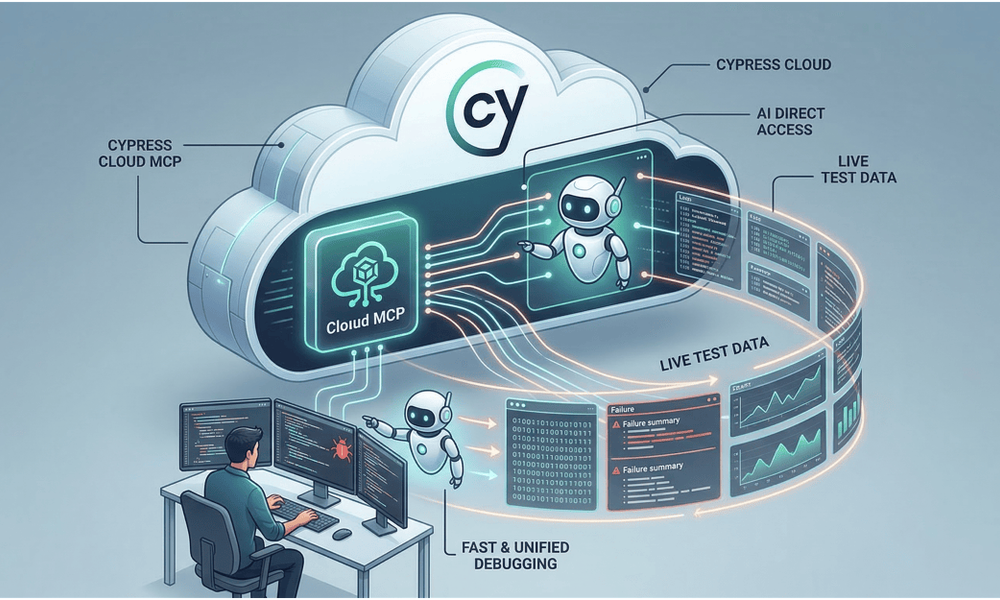
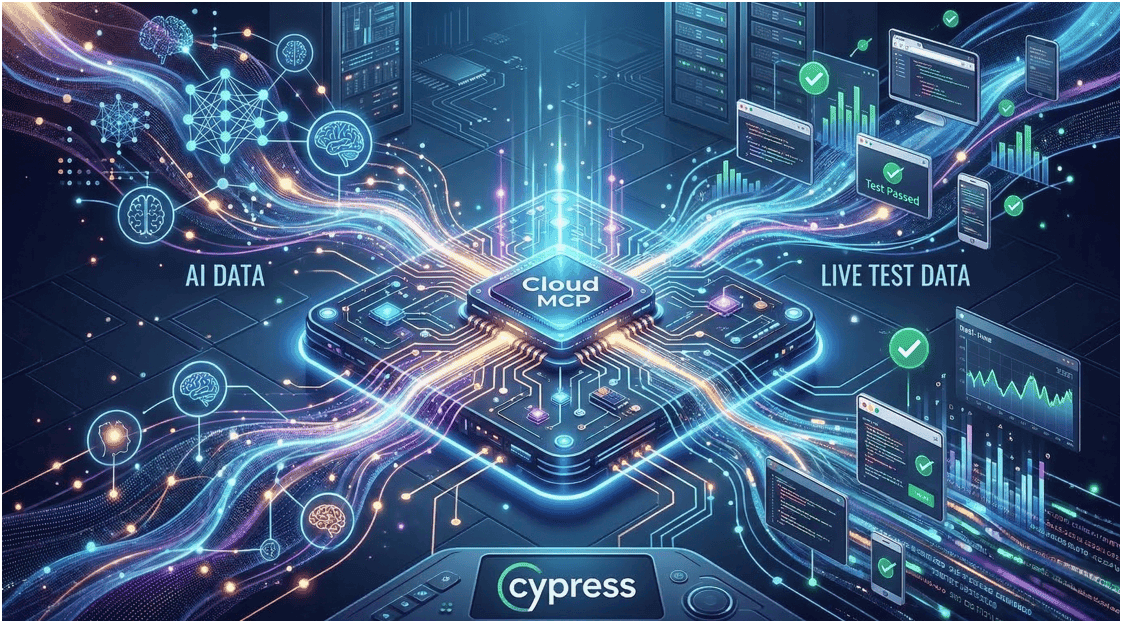
Cypress launched Cloud MCP (Model Context Protocol), a system that allows AI assistants to access live test data inside Cypress Cloud without relying on engineers to manually paste logs, summarize failures, or build prompts around every issue.
That matters because it changes how debugging support fits into the workflow. Instead of acting as a separate tool that depends on human relay, the AI can work from the same testing context that developers already use, which makes investigation faster and less fragmented.
Real-Time Test Analysis Without Human Relay
Cloud MCP creates a tighter link between failed tests and the debugging process. When a test breaks, an MCP-compatible assistant can retrieve relevant assets such as stack traces, recordings, and test results without waiting for an engineer to explain what happened first.
What Changes for Development Teams Day to Day
For development teams, the advantage is practical. Instead of spending time translating technical failures into prompts, they can move more quickly from failure to diagnosis by:
- retrieving stack traces, recordings, and test results automatically
- reducing time spent packaging issues for AI tools
- speeding up root-cause analysis during active QA cycles
- keeping debugging closer to the systems developers already work in
That kind of workflow improvement is especially useful for teams managing frequent releases, where even small delays can add friction across the broader QA cycle.
Reducing Workflow Friction for Georgia Tech Teams
One of the biggest reasons AI tools lose momentum inside engineering organizations is that they create extra work before they create value. If a team has to stop and feed an assistant the right context every time something fails, the tool starts to feel disconnected from the workflow it is supposed to support.
Cloud MCP addresses that problem by making the test context available inside the environment itself rather than asking developers to reconstruct it manually. For companies across Georgia’s tech sector, especially those operating in regulated, high-volume, or fast-moving environments, that kind of fit matters more than novelty. Teams are far more likely to adopt AI tools that support existing processes than ones that require a separate operating habit.
Controlled Access Through Protocol Standards
Security concerns remain one of the biggest barriers to deeper AI adoption, especially for companies handling proprietary systems, tightly managed development environments, or sensitive customer data. Cypress addresses that concern through a permission-based model rather than broad, unrestricted access.
Why Permission-Based Access Matters for Enterprise Teams
Under this structure, the AI assistant can be granted limited access to specific test runs or debugging tasks instead of broad visibility across the full environment. That makes the system more useful without creating the kind of exposure that often slows security reviews or internal approvals. For enterprise teams, that balance can determine whether an AI feature moves forward or stalls before rollout.
Investment Signal: Infrastructure Over Models
Cypress has backing from Bessemer Venture Partners and Threshold Ventures, and Cloud MCP suggests a larger strategic direction. Rather than trying to compete with model builders directly, Cypress is strengthening its position in the layer that makes AI usable inside real development workflows.
That distinction matters because long-term value often comes from owning the connection between intelligence and operational systems, not just the model itself. For Georgia’s technology sector, that is a more practical signal than another broad AI product announcement.
Expansion Into Development Workflow Orchestration
Cloud MCP also points to where development tooling may be heading next. As more platforms adopt shared standards for AI access, teams will be better positioned to use assistants that move across testing, debugging, and delivery workflows with less manual setup.
For engineering organizations in Georgia, the larger takeaway is not simply that AI is becoming more capable. It is that development tools are starting to supply the context these systems need on their own, which makes adoption easier to scale across real operations.
The shift is becoming clearer: AI support is moving closer to embedded capability inside core engineering systems rather than remaining a separate layer of help on the side.
For more insight into how AI, testing infrastructure, and software operations are evolving across the state, check the Peach State Tech blog page for ongoing coverage of Georgia’s business and technology landscape.