



Why Electronic Monitoring Is Getting More Attention in Georgia?
"By bridging media intelligence with verified readership, communications teams can finally connect narrative to actual engagement."
Across Georgia, there is increasing focus on improving how government agencies, law enforcement, and community corrections agencies manage community supervision and broader criminal justice workflows.
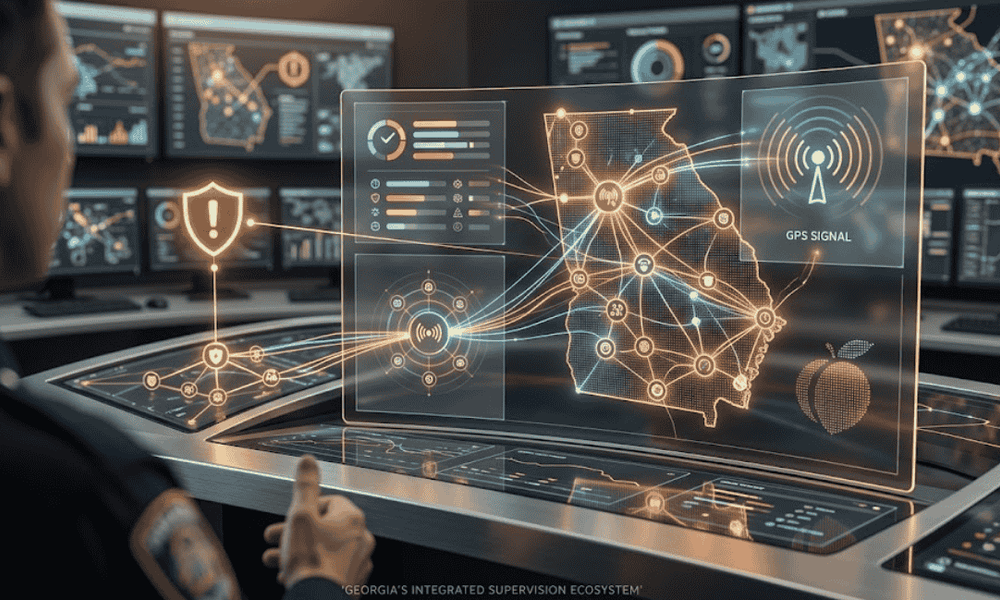
This move is bringing electronic monitoring technology back into focus, not just as a form of house arrest or home detention, but as part of a broader ecosystem of electronic monitoring systems designed to support public safety and operational clarity.
Today’s systems rely on:
- global positioning system capabilities
- gps signals and gps location data
- real time updates and alerts
- structured location monitoring and location information
This reflects a wider trend: agencies are moving away from isolated electronic monitoring devices toward more integrated electronic monitoring software and data-driven systems.
What Human-Centered Electronic Monitoring Technology Actually Means
The biggest change in electronic monitoring technology is not just hardware, it is how the entire system works together.
What makes newer electronic monitoring tools different from older models?
Older models relied heavily on radio frequency or basic radio frequency monitoring, often tied to a base station or base unit inside a residence.
Newer approaches combine:
- active GPS tracking and passive GPS tracking
- wearable electronic devices such as a GPS wrist wearables
- connected electronic monitors
- cloud-based electronic monitoring software
This creates a more flexible and scalable form of electronic supervision compared to older electronic monitoring programs.
Why are participant experience and compliance becoming bigger parts of the story?
A key move is the recognition that usability impacts the effectiveness of electronic monitoring.
Instead of relying only on enforcement, newer systems support compliance through:
- clearer communication with a supervising officer
- structured updates tied to curfew conditions
- alerts for curfew violations
- tools that help individuals manage home detention requirements
This aligns with the broader goal of improving outcomes in community corrections and probation services, while still maintaining accountability for individuals under supervision.
How does victim safety technology change the conversation around monitoring technology?
Another major development is the integration of victim safety technology.
With tools like exclusion zones and geofencing, systems can:
- define protected areas
- monitor GPS location boundaries
- send alerts based on real time movement
This expands the role of electronic monitoring technology beyond tracking into proactive safety support for both individuals and communities.
What is driving the move toward modern electronic monitoring systems?
The growing attention around electronic monitoring systems is not happening in isolation. It reflects broader pressure across government agencies, community corrections agencies, and law enforcement to operate with more structure, visibility, and consistency.
In many cases, traditional approaches created fragmented workflows like separate tools for tracking, reporting, and communication. That made it harder for a supervising officer or parole officer to maintain a clear, real-time view of a case.
Newer systems are responding to that challenge by combining real time tracking, centralized dashboards, and data analytics into a more unified approach. Instead of relying on disconnected electronic monitoring devices, agencies are moving toward platforms that bring together location information, alerts, and case updates in one place.
At the same time, increasing caseloads and ongoing staffing constraints are pushing agencies to adopt tools that reduce manual work without sacrificing accountability. That includes smarter use of gps signals, automated notifications, and better integration across electronic monitoring programs.
Taken together, these changes point to a larger shift: electronic monitoring technology is no longer just about enforcement. It is becoming part of a broader effort to build systems that are easier to manage, more transparent, and better aligned with how modern public-sector operations actually function.
How Talitrix Fits the Shift Toward GPS Wrist Wearables?
One Georgia-based company helping illustrate this evolution is Talitrix. Rather than focusing only on hardware, Talitrix reflects a broader shift seen across electronic monitoring companies through moving toward connected systems that combine devices, software, and real-time data.
Its approach includes:
- independent GPS wrist wearables designed to reduce stigma associated with traditional ankle bracelet systems
- a participant app that simplifies compliance and reduces friction in daily routines like grocery shopping or schedule management
- a victim safety technology layer built around geofencing and exclusion zones
- a supervisor-facing case management system that supports parole officer and probation services workflows
Talitrix emphasizes data analytics, real-time visibility, and integrated tools that help reduce administrative friction while improving oversight.
This reflects how electronic monitoring technology is evolving from standalone electronic monitoring devices into fully connected systems that support both accountability and usability.
Why This Matters Beyond One Company
Why does this matter for Georgia’s public-sector innovation story?
The evolution of electronic monitoring technology is not just a justice-system issue. It is also a broader Georgia innovation story.
It highlights how companies are building systems that support:
- community supervision at scale
- better coordination across department of corrections environments
- reduced pressure on detention facilities and detention centers
- alternatives to traditional form of incarceration
It also reflects a growing interest in tools that improve visibility across electronic monitoring programs, including specialized solutions like alcohol monitoring, continuous remote alcohol monitoring, and secure continuous remote alcohol monitoring systems such as SCRAM remote breath technologies.
For Peach State Tech, this signals that innovation is not only happening in high-profile sectors, but also in systems that quietly shape how the state operates.
As agencies continue exploring the use of electronic monitoring, the focus is moving toward smarter systems that balance accountability, usability, and long-term outcomes across the criminal justice landscape.
Where Electronic Monitoring Technology Goes Next in Georgia
The evolution of electronic monitoring technology in Georgia is still unfolding, but the direction is becoming clearer. The category is moving toward systems that are more connected, more adaptive, and more aligned with how agencies actually operate on the ground.
Future developments will likely continue to build on:
- deeper integration between electronic monitoring systems and case platforms
- expanded use of data analytics to support decision-making
- more responsive tools powered by real time location information
- continued refinement of wearable formats, including GPS wrist wearables
There is also growing interest in how monitoring tools can better balance accountability with usability. That includes improving communication between participants and a supervising officer, reducing unnecessary friction in daily routines, and strengthening safeguards through victim safety technology.
For Georgia, this signals a broader opportunity. As agencies adopt more modern electronic monitoring programs, the focus is moving from isolated tools to systems that support long-term outcomes across the criminal justice process.
Electronic monitoring may not be the loudest corner of Georgia tech, but it is becoming one of the more important ones. Follow Peach State Tech for more stories on the companies and systems reshaping how the Peach State operates.