


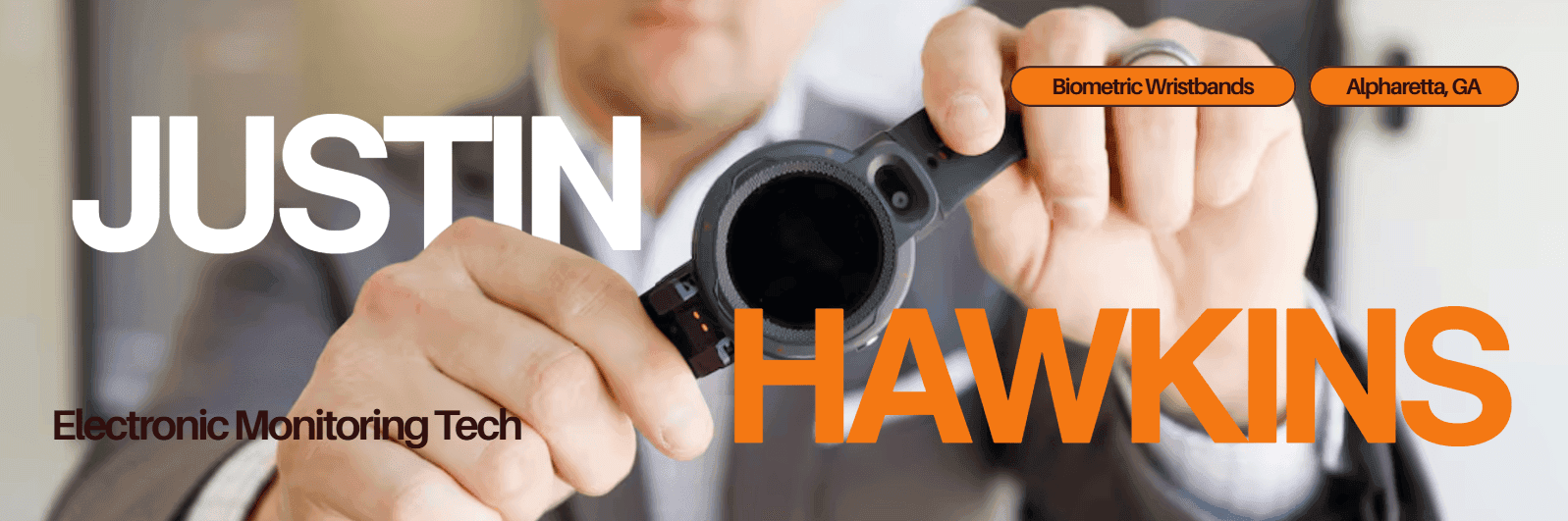
Who Is Justin Hawkins of Talitrix?
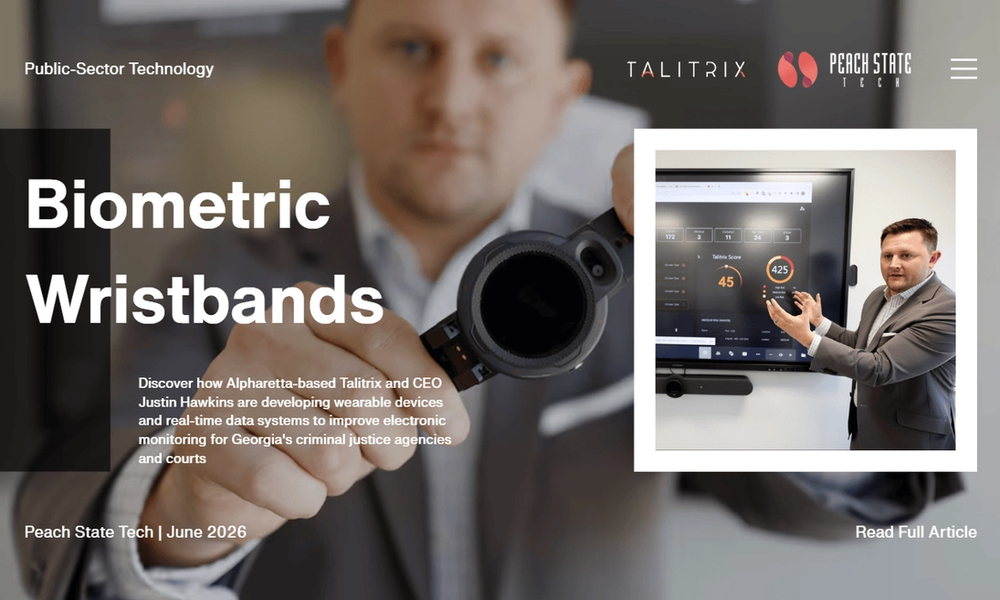
Justin Hawkins is the co-founder and chief executive officer (CEO) of Talitrix, a Georgia-based company that develops electronic monitoring technology. He leads the company's business strategy and represents Talitrix in its work with courts, government agencies, and criminal justice agencies.
This article refers to Justin Hawkins of Talitrix, not the English musician of the same name. For readers searching for Justin Hawkins Talitrix, the important point is his role in building a company focused on wearable monitoring tools for the justice system.
Talitrix was founded in 2020 and is based in Alpharetta, Georgia. The company entered the justice technology field with wrist-worn devices, cloud-based tools, and real-time data systems. These tools were designed to improve on the industry's standard ankle monitors. That focus makes the Talitrix solution part of Georgia's growing public-sector technology market.
What Talitrix Does in Electronic Monitoring Technology
Talitrix develops electronic monitoring technology for criminal justice agencies, courts, and community supervision services. Its platform helps agencies track participants, manage compliance, and organize monitoring data through wearable devices and software.
The company's technology includes GPS wristband monitoring, participant check-ins, case management support, and tools built for court and supervision work. Talitrix does not rely only on traditional ankle monitors. It offers wrist-worn monitoring with real-time data in one system.
Courts, sheriff's offices, probation programs, and government agencies use monitoring tools to reduce manual work and respond faster to compliance issues. This is where Justin Hawkins fits into Georgia's justice technology market, with wristbands, software, and case management features designed for daily supervision work.
How Talitrix Biometric Wristbands Work
Talitrix biometric wristbands are wearable devices used in justice and supervision settings. The company describes its All-In-One Band as an independent wrist-worn GPS supervision device. It connects to the Talitrix ONE platform and does not require a phone or base station.
The wristbands support location monitoring, tamper alerts, biometric data capture, and participant check-ins. Public reporting has also described Talitrix wristbands in jail settings. These devices can monitor location and heart-rate data. These features make the device different from older monitoring tools that focus mainly on location tracking.
Talitrix biometric wristbands include several features designed for court, jail, and supervision settings:
- Wrist-worn monitoring gives agencies an alternative to the industry's standard ankle monitors.
- GPS tracking supports location-based supervision.
- Redundant GPS helps strengthen real-time location monitoring.
- Heart rate monitoring adds biometric insight in certain jail-monitoring settings.
- Tamper alerts help agencies identify possible device interference.
- Case management support connects monitoring data with agency workflows.
- Battery life supports daily use depending on the device and setting.
These features give agencies more data than location-only monitoring tools. The Talitrix solution can help staff track participants, review alerts, and manage supervision data in one system. At the same time, biometric wristbands raise public questions about surveillance, privacy, cost, and accountability.
Talitrix, Fulton County Jail, and Public Debate
Talitrix has received public attention because of its work connected to Fulton County Jail. Public reporting has linked the company to a monitoring project that involved wristbands and monitoring devices for inmates. The project later raised questions about jail spending, contract management, technology rollout, and oversight.
The Fulton County jail lawsuit involving Talitrix should be described carefully. Reports have framed the issue as a contract and payment dispute, not as a personal controversy involving Justin Hawkins. AP reported that Fulton County commissioners rescinded $2.1 million in funding for Talitrix. The company was expected to provide 1,000 wristbands and monitoring devices. AP also reported that only 15 devices were in use. Talitrix later sued the sheriff's office over nonpayment.
The dispute has since been resolved in court. A judge ruled that Talitrix should be paid per its contract with the Fulton County Sheriff's Office, plus $140,000 in attorneys' fees. A jury separately found that the county's refusal to pay was made in bad faith, awarding Talitrix an additional $1.6 million in litigation costs.
Separate from the payment dispute, privacy advocates including the ACLU of Georgia have raised broader concerns about biometric monitoring in jails, and about how agencies collect and retain that kind of data on people in custody. The court's ruling settles the contract question; it does not settle that separate debate.
The issue goes beyond Talitrix. Government agencies may want better monitoring tools, but they also need clear procurement rules, realistic implementation plans, transparent spending, and public trust. The Fulton County case shows why public safety technology needs both strong tools and strong oversight.
Talitrix's New Partnership With Judicial Innovations
Talitrix also entered a new partnership and reseller agreement with Judicial Innovations. Through the agreement, Judicial Innovations can offer Talitrix monitoring tools to its customers. These customers include courts and agencies that already use digital tools for case-related services.
Judicial Innovations is an Atlanta-based company that provides cloud-based platforms for court-related services. These include traffic court resolution, government payments, probation management, and DUI schools. The partnership makes sense because both companies serve courts, criminal justice agencies, and public-sector programs.
Judicial Innovations CEO Jarrett Gorlin has a background in law enforcement and has built technology tools that help courts manage public access, payments, and case-related services. That experience connects the company's work to the same court and supervision market that Talitrix serves.
For Talitrix, the distribution partner can help the company reach more criminal justice agencies and court systems. For Judicial Innovations, the partnership adds electronic monitoring technology to its existing tools for court and supervision work.
Why Talitrix Matters to Georgia's Tech Ecosystem
Talitrix adds to Georgia's technology ecosystem by building specialized tools for public-sector challenges. The company is not working in a broad consumer technology category. It focuses on electronic monitoring technology for criminal justice, jail operations, and community supervision services.
That makes Justin Hawkins CEO of Talitrix relevant beyond a founder profile. The company brings together wearable devices, government technology, public safety tools, and justice reform concerns in one product category. It also shows how Georgia-based firms are using software, hardware, and data tools for court, jail, and supervision work.
The public debate around electronic monitoring also shows why these tools need careful oversight. Technology can help agencies collect data and review compliance issues, but it cannot replace strong leadership, ethical safeguards, clear policies, and responsible implementation.
Key Takeaway
Justin Hawkins of Talitrix matters for several reasons. He connects a Georgia tech founder, a public safety startup, and questions about electronic monitoring technology. Talitrix biometric wristbands show how courts, jails, and supervision programs can use wearable devices. The Fulton County case, now resolved in Talitrix's favor, also shows why public-sector technology needs clear rules, transparent spending, and careful oversight.
At Peach State Tech, Justin Hawkins and Talitrix are more than a company profile. Their story shows how Georgia's technology ecosystem is building tools for courts, jails, supervision programs, and other public-sector needs. Georgia's tech ecosystem is expanding into public safety, court technology, and specialized government tools. Peach State Tech spotlights the founders and companies building these solutions and helping define the next stage of innovation across the state. Follow Peach State Tech for more Georgia startup stories like this one, and share it with others tracking the future of public-sector technology.