

The Enterprise AI Adoption Problem in Georgia
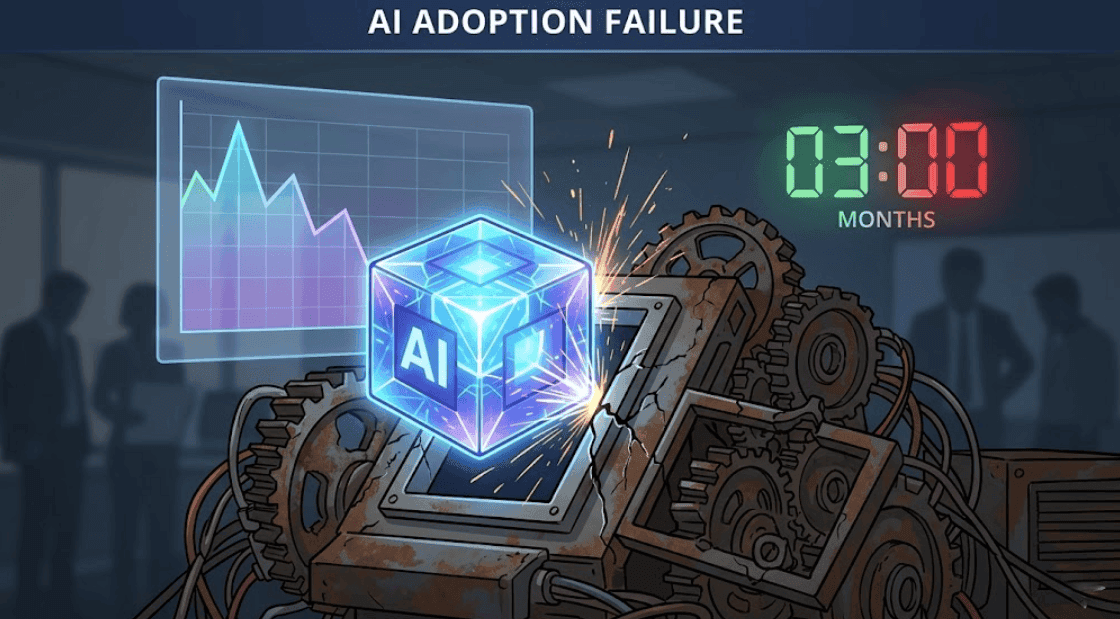
Georgia companies continue to invest in artificial intelligence training programs and digital transformation efforts. Employees attend workshops, test new AI applications, and learn how to use generative AI systems inside daily operations. Despite these investments, many businesses still struggle with enterprise AI adoption. Most workers stop using AI tools within three months.
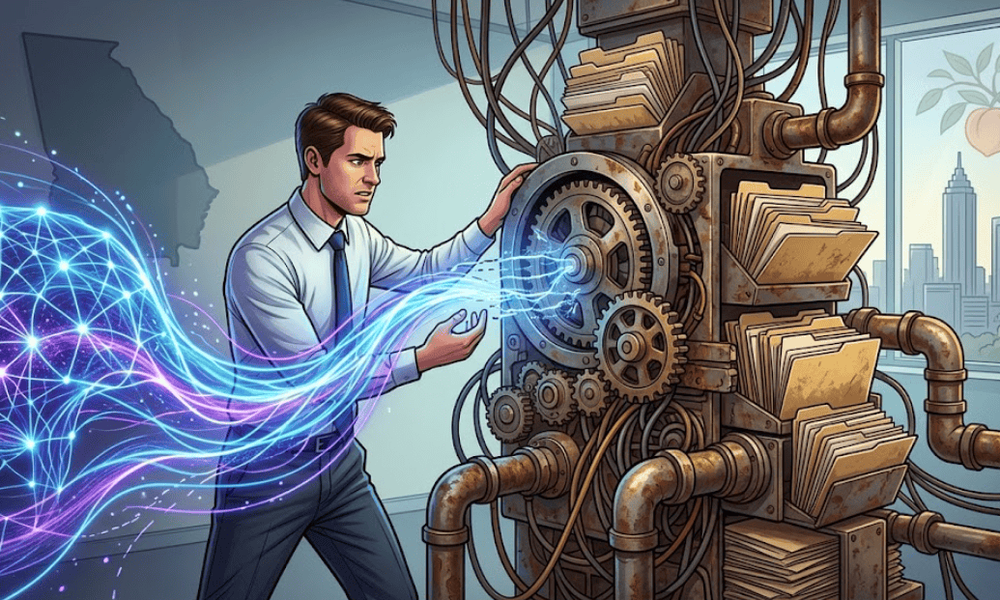
The problem is not employee resistance. Many workers are interested in the power of AI and want to improve employee productivity. The larger issue comes from outdated business processes, weak data infrastructure, and disconnected workflows. Companies often launch AI initiatives without changing the operational systems employees already use every day.
Many organizations also focus too heavily on AI capabilities while ignoring business objectives and strategic alignment. Employees return from training sessions and discover that AI tools do not fit naturally into existing workflows. Workers eventually go back to manual processes because old systems remain easier to manage.
Enterprise leaders often underestimate the complexities of AI adoption. Successful enterprise AI adoption requires workflow redesign, change management, and strong data governance practices that support long-term business transformation.
Why Employees Stop Using AI Tools
Most employees begin AI training programs with strong interest. Workers want faster workflows, cost savings, and better customer experience outcomes. Many teams also expect AI projects to reduce repetitive tasks and improve business value across departments.
Problems begin after employees return to normal work environments. Many organizations still depend on outdated spreadsheets, disconnected platforms, and manual approval systems. AI tools become difficult to use when workers cannot access clean data or reliable information.
A marketing employee may learn how to automate reporting with large language models or AI agents. That same worker may still need to gather unstructured data manually from different systems before automation can begin. Employees quickly compare effort against reward. Familiar manual work often feels easier than struggling with poor systems to save a small amount of time.
Several operational issues continue slowing enterprise AI adoption across Georgia businesses.
- Poor Data Infrastructure
- Disconnected Business Processes
- Limited Access To Sensitive Data
- Weak Data Governance Policies
- Manual Approval Systems
- Separate AI Applications Outside Existing Workflows
These operational barriers reduce the value of AI across business teams. Workers eventually abandon automation when AI systems increase complexity instead of improving productivity.
The Efficiency Trap Affecting AI Adoption
Many companies unintentionally weaken enterprise AI adoption through poor management structures. Employees who use machine learning systems or AI tools to complete work faster often receive additional manual assignments instead of strategic responsibilities. This operational problem creates a major barrier to long-term AI readiness. Workers lose motivation when automation increases workload rather than improving workflow efficiency. Many employees begin viewing AI strategy programs as extra work instead of operational support.
Corporate leaders with stronger AI retention rates usually measure performance differently. Successful organizations focus more on business value, output quality, customer satisfaction, and strategic goals instead of measuring hours spent on repetitive work. Organizations that support continuous improvement often build stronger AI adoption rates because employees see practical benefits from automation efforts.
Why Workflow Redesign Improves Enterprise AI Adoption
Georgia companies with stronger AI implementation results usually redesign workflows and improve AI workflow automation before expanding AI projects. These organizations understand that enterprise AI adoption depends on operational structure, not only technical expertise. AI systems perform better when integrated directly into existing business processes. Employees are more likely to continue using AI tools when automation supports daily work instead of creating additional steps.
Several operational improvements help companies increase long-term AI adoption rates.
- Integrated AI Agents Inside Existing Software
- Faster Access To Clean Business Data
- Simplified Approval Workflows
- Better Risk Management Systems
- Performance Metrics Based On Outcomes Instead Of Logged Hours
- Stronger Data Science And Data Governance Support
Integrated workflows reduce confusion and improve customer service outcomes. Employees no longer need to move between disconnected systems throughout the workday. Reliable data infrastructure also improves AI model performance and reduces operational delays. Businesses that align AI strategy with specific needs and business objectives usually produce stronger operational results and sustainable growth over time.
Why Specialized AI Applications Produce Better Results
Generic AI training programs often fail because they focus on broad concepts instead of real operational needs. Employees may understand the potential of AI but still struggle to apply automation during daily work. Many organizations are now investing in specialized AI applications built for specific industries and workflows. Companies using purpose-built systems often see stronger customer experience improvements, deeper insights from operational data, and better employee productivity outcomes.
Healthcare organizations, financial firms, and retail companies are increasingly adopting AI agents designed for industry-specific workflows. These systems often improve regulatory compliance, support proactive approach planning, and reduce potential risks connected to manual operations. Specialized AI systems also simplify adoption because workers continue using familiar software environments. AI becomes part of normal workflows instead of a separate platform that employees must constantly manage.
What Trends Are Shaping Enterprise AI Adoption in 2024 and Beyond?
Enterprise AI adoption is moving beyond basic chatbot experiments and simple automation tools. Many organizations are now focusing on long-term operational integration that connects AI systems directly to business processes, customer service platforms, and internal reporting systems.
Large language models are becoming more common inside enterprise software environments. Companies are also investing more heavily in AI agents that can complete structured tasks with limited human involvement. Many business teams now expect AI systems to support faster reporting, predictive analysis, and workflow management instead of functioning as standalone tools.
Several trends are shaping enterprise AI adoption across Georgia and other growing technology markets.
- Greater Investment In AI Governance Frameworks
- Increased Focus On Data Governance And Regulatory Compliance
- Expansion Of Industry-Specific AI Applications
- Higher Demand For AI Infrastructure And Clean Data Systems
- Stronger Alignment Between AI Strategy And Business Objectives
- Increased Adoption Of Generative AI Across Customer Service And Internal Operations
Enterprise leaders are also placing more attention on risk management and ethical concerns connected to sensitive data handling. Businesses that build strong governance systems early are often better positioned to scale AI projects without creating operational instability.
How Georgia Companies Are Measuring AI Readiness
Many organizations are changing the way they evaluate organizational AI readiness and long-term AI success. Older AI initiatives often focused heavily on the number of employees trained on generative AI systems. Modern companies now pay closer attention to workflow automation, business transformation, and operational efficiency.
Enterprise leaders are also placing greater focus on AI governance frameworks, strategic alignment, and long-term competitive advantage. Strong AI adoption depends on more than technical teams or advanced software systems. Businesses also need clear governance structures, strong change management practices, and a holistic approach to workflow redesign. Organizations with stronger AI readiness usually share similar operational priorities. These companies improve data infrastructure early, align AI strategy with business objectives, and build systems that support both employees and automation tools.
Companies that continue operating with outdated workflows will likely face ongoing AI implementation challenges, even after large investments in training and software. Sustainable enterprise AI adoption depends on operational systems that support automation, reduce friction, and improve long-term business value.
How Do Small And Medium-Sized Enterprises Approach AI Adoption Differently Than Large Companies?
Small and medium-sized enterprises often approach enterprise AI adoption differently from large corporations. Many smaller businesses operate with lean technical teams, limited budgets, and fewer internal data science resources. These limitations often force smaller companies to focus on practical AI use cases that deliver immediate business value.
Large organizations usually invest in broader AI initiatives that involve workflow redesign, AI governance frameworks, and long-term infrastructure planning. These companies often build internal AI strategy teams that manage implementation across multiple departments and operational systems.
Smaller businesses typically prioritize simpler AI applications connected to customer experience, social media management, marketing automation, and employee productivity. Many small companies adopt cloud-based AI systems because these tools reduce infrastructure costs and lower technical barriers.
Despite these differences, both large and small organizations face common barriers during AI implementation. Poor data infrastructure, weak strategic alignment, and disconnected business processes continue affecting adoption rates across companies of every size. Businesses that connect AI investments to specific needs and measurable business objectives usually achieve stronger long-term results, regardless of company size.
Key Takeaway
Organizations seeking stronger enterprise AI adoption often benefit from operational reviews that evaluate workflow design, AI infrastructure, data governance, and automation readiness before expanding AI initiatives. Strategic workflow redesign can improve employee productivity, reduce operational delays, and support long-term business transformation goals.
Peach State Tech covers the companies, founders, and technology trends shaping Georgia’s growing AI economy. Businesses exploring enterprise AI adoption and AI workflow automation can follow Peach State Tech for industry insights and coverage on how Georgia companies are applying AI across real business operations. Companies building AI-driven solutions or modernizing internal workflows can also use the platform to increase visibility across Georgia’s technology ecosystem.