

Government Contracts Are Built for Incumbents
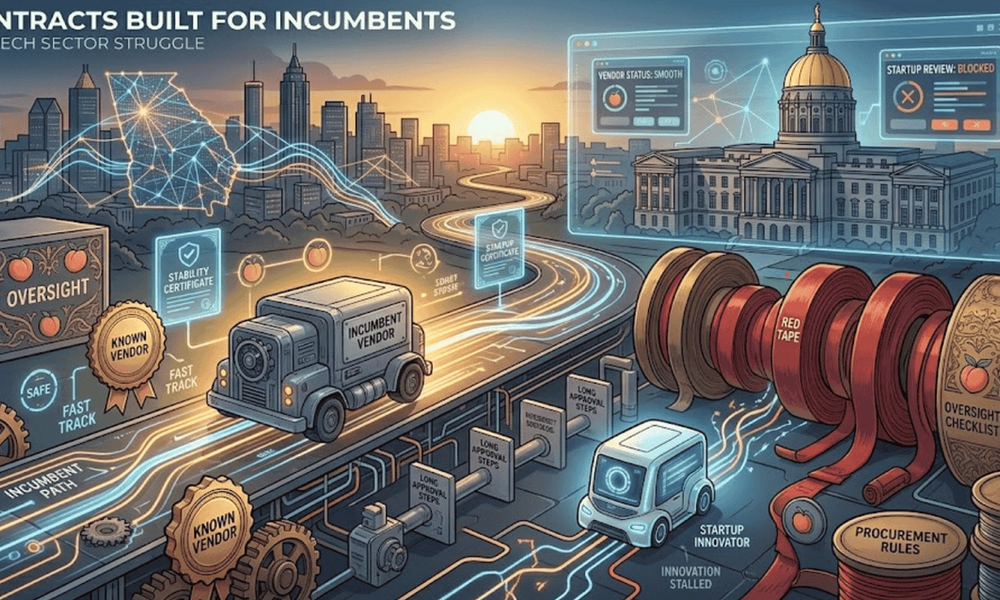
Most government contracts are designed for stability, not change. In many cases, local government, city governments, and federal government agencies choose vendors they already know. These vendors are often large software companies from the private sector.
As a result, the procurement landscape dictates that:
- Existing vendors are easier to keep
- New startups face long approval steps
- Decisions favor safety over innovation
For many government workers and team members, this feels like the safest option. But it slows down government efficiency and limits growth in the govtech sector.
The Hidden Barriers Facing GovTech Startups
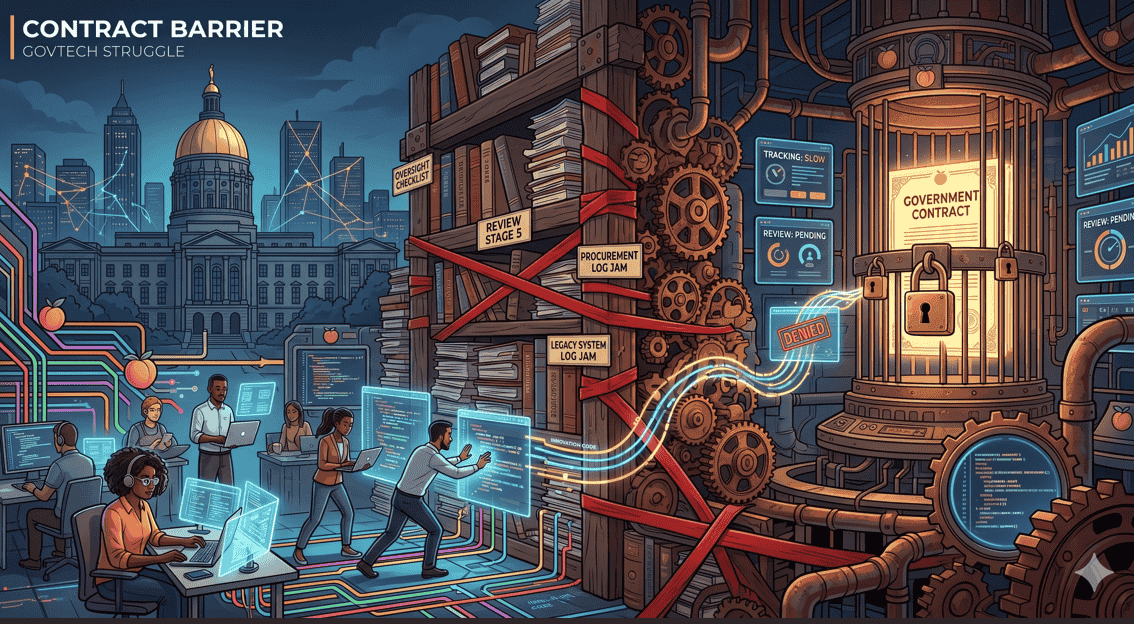
Startups face many challenges when entering the US government market. The process often involves long timelines, strict rules, and complex systems. Many startups must go through a slow application process, follow strict rules for sensitive information, and deal with limited access to decision-makers in city governments.
Beyond bureaucracy, startups face massive technical hurdles: outdated, disconnected data systems make integration nearly impossible.
These are major procurement process issues that slow down government technology adoption. Even startups with strong backing—such as those with Series B, Series C, or high total funding—can struggle to keep up.
Why Better Technology Isn’t Enough
Contrary to popular belief in the tech sector, the best software does not always win the government contract.
Many agencies still rely on data silos and outdated systems. This creates a dangerous lack of visibility across departments. Important data does not always connect, especially in areas like criminal justice data today and human services.
For example, a city's police department might struggle to access body camera footage, while its transit agency lacks real-time location data, and its municipal clerks still manage critical records entirely on paper. Even if a new software platform is better, it must fit into these systems. Bureaucratic inefficiency ultimately becomes an insurmountable barrier at this exact integration point.
When Startups Break Through—and Still Get Blocked
Some startups succeed at first. They enter the system, deploy their tools, and show that the technology works. Companies like Hayden AI and Flock Safety show how deeptech companies can improve law enforcement using real-time data. In cities like San Francisco and New York, these tools are already being tested.
There are also platforms like Token Transit that improve payment systems in public transportation. But even when systems work, they can still fail.
For instance, Talitrix successfully deployed a biometric monitoring system in a county correctional facility to track health data and improve safety in real time. Despite the technology functioning exactly as promised, institutional dysfunction, shifting political priorities, and internal breakdowns derailed the project. The case later turned into a legal dispute that cost public funds.
The Talitrix case highlights a critical failure point: even fully functional, innovative solutions can collapse under the weight of the bureaucracy.
The Real Problem: Institutional Resistance to Change
The main issue is institutional resistance to change. Government systems are built to stay stable. Change requires time, effort, and coordination.
Successfully deploying modern infrastructure demands:
- Better data processing across departments
- Integration between local systems and the federal government
- Alignment with tools like a constituent services platform
Each step adds friction. Consequently, agencies actively avoid change, leaving government procurement innovation stagnant.
What Needs to Change for Startups to Compete
To support govtech startups, the system must improve. Agencies need better coordination across transit agencies, city governments, and federal offices. They must also improve how they handle constituent requests, constituent communications, and constituent preferences.
Better use of tools like control platforms can help connect systems and improve visibility. At the same time, growth in areas like the burgeoning defense tech ecosystem, including companies like Parry Labs, shows that change is possible. With the right systems, governments can improve government services, support human services, and deliver better outcomes.
What Defines the Fastest-Growing GovTech Startups in 2026
The fastest-growing govtech startups in 2026 focus relentlessly on solving acute, real-world problems inside government services, especially in areas like law enforcement, public transportation, and human services. Many use artificial intelligence, data science, and big data to improve how agencies collect and use information.
These startups also build tools that work in real time. Real-time functionality drastically reduces delays and improves decision-making across disparate systems.
Another key factor is adaptability. The most successful companies design their software platforms to work with existing systems, even if those systems are outdated. Prioritizing interoperability allows agencies to adopt new tools without ripping out their legacy infrastructure.
Companies like Hayden AI and Flock Safety show how strong execution and clear use cases can drive growth in the govtech sector. But even with these strengths, growth still depends on whether procurement systems allow these solutions to scale.
Why Investors Are Paying Attention to GovTech Startups
More investors are starting to look at govtech startups as a long-term opportunity.
One reason is the size of the market. The US government, including local government and federal government agencies, spends billions each year on technology and infrastructure. This creates strong demand for better tools and systems. Another reason is stability. Government contracts are often long-term, which can provide steady revenue once a company is able to enter the system.
There is also growing interest in sectors like the burgeoning defense tech ecosystem, where companies such as Parry Labs are building advanced solutions for national security and defense. At the same time, startups working with public records, data processing, and constituent services platforms are becoming more valuable as governments push for better digital services.
However, investors also understand the risks. Long sales cycles, complex procurement rules, and institutional resistance to change can slow growth. The true competitive advantage in GovTech lies in mastering the bureaucratic maze that dictates deployment, rather than relying solely on superior software.
Closing the Gap Between Innovation and Implementation
The gap between what startups build and what governments use is still growing. In the coming years, this gap may become even more visible as demand increases. Govtech startups are fully ready to deliver; the procurement system is simply structurally incapable of receiving them.
The challenges facing govtech startups are part of a bigger story about how innovation moves through real systems. Peach State Tech covers the companies, trends, and decisions shaping Georgia’s growing tech ecosystem from startups to public sector change. If you want to see how these shifts are happening in real life, that’s where the full picture comes together.