


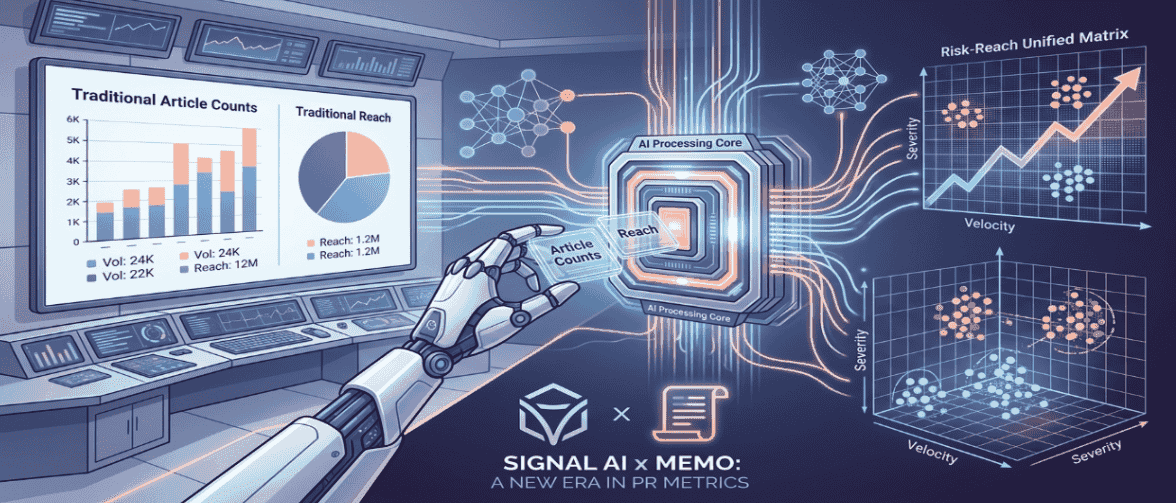
What Signal AI’s acquisition of Memo Means?
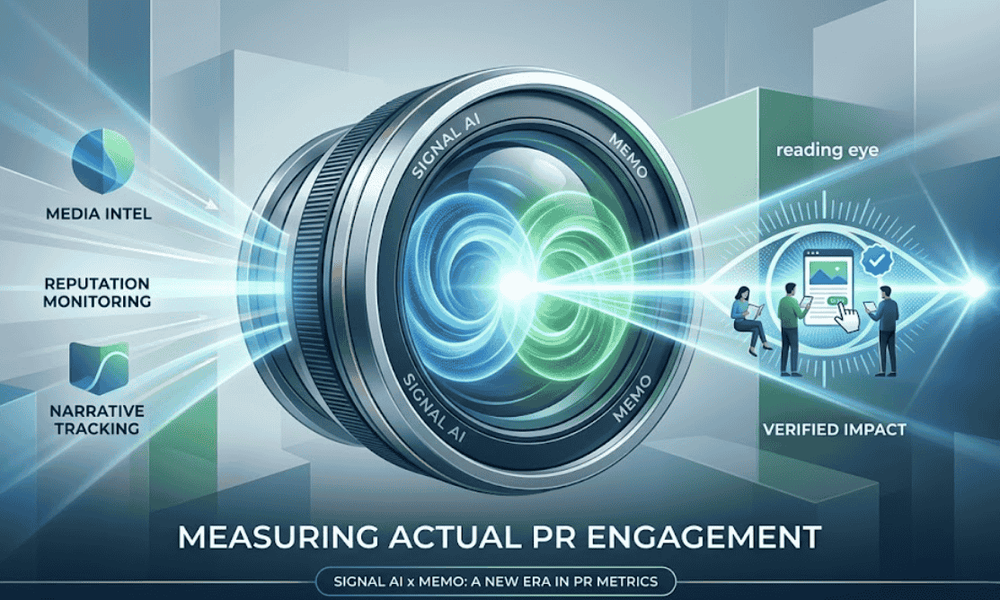
The Signal AI Memo acquisition brings together two complementary capabilities. Signal AI has built its position around media intelligence, reputation monitoring, and narrative tracking. Memo is known for publisher-side verified readership data, giving brands access to clearer evidence of how many people actually clicked and read a story. This makes verified readership data a more central part of how PR teams evaluate earned media performance.
The integration changes the conversation around PR metrics by giving communications teams more actionable insights into how audiences actually engage with earned media. Instead of relying only on modeled visibility, communications teams can move closer to actual engagement and more credible pr evaluation. In practical terms, the acquisition helps answer what is being said and who is actually paying attention.
This matters because many PR teams are still reporting on media mentions, brand mentions, and estimated reach without being able to show whether those results drove meaningful engagement. As executive teams ask for stronger key performance indicators, tools that surface better evidence become more valuable.
Why PR Teams Are Moving Beyond Estimated Impressions
Traditional PR reporting has long depended on assumptions. Coverage appears in media outlets, and teams assign likely views based on publication traffic or circulation. That may give a rough picture of scale, but it often falls short when leaders want meaningful metrics.
Today, communications teams are expected to show that their pr efforts are driving more than visibility. The demand for proven ROI forces organizations to rethink which PR metrics reflect true audience engagement. They need to connect outcomes to business goals, support campaign success, and prove that their work contributes to wider marketing priorities, reputation management, and measurable business outcomes.
Older methods are naturally under pressure. Estimated impressions show potential reach but fail to reveal if the article influenced key business drivers.
- Brand perception
- Share of voice
- Stronger PR performance
Actual Readership vs Potential Reach
Potential reach suggests how many people might have seen something. Verified readership shows how many people actually engaged with it. As communications teams demand more accurate PR metrics, verified readership data becomes more useful than estimated exposure alone.
Understanding the gap between potential and verified reach is vital for PR success. In a reporting environment where leaders care about key metrics, it is no longer enough to rely on directional estimates from traditional media coverage alone. Teams increasingly want evidence they can compare across channels, campaigns, and outcomes.
How Verified Readership Data Changes Earned Media Measurement
Verified readership data gives PR teams a more grounded way to assess article engagement. Rather than estimating exposure, it uses publisher-sourced information to show actual readership behavior.
Verified data helps teams identify the specific media outreach generating the strongest engagement. It also improves how teams assess PR KPIs, especially when they are trying to understand whether coverage is tied to visibility, authority, or stronger audience response.
The change is especially important as PR becomes more integrated with digital strategy. Many teams already use Google Analytics, social media analytics, and other analytics tools to track website behavior. When earned media reporting becomes more precise, it becomes easier to compare PR outcomes with broader digital signals, such as:
- Website traffic
- Website visits
- Social media engagement
For many organizations, verified readership data offers a more defensible way to connect media coverage with audience engagement.
First-Party Publisher Data as a Measurement Advantage
Publisher-side data gives communicators access to qualitative data and engagement evidence that is far more useful than generalized traffic estimates. Direct engagement metrics create valuable insights for brands trying to understand three core areas.
- Which stories perform best
- Which media relations efforts are generating stronger outcomes
- Which outlets truly help move reputation or awareness
First-party data aligns PR with the rest of the marketing function, especially as media monitoring platforms evolve toward deeper analytics. Marketing teams already think in terms of measurable signals. PR teams now face growing pressure to show similar rigor in how they define pr effectiveness and report campaign value.
What Memo Adds to Signal AI’s Reputation Intelligence Platform
Signal AI has focused on helping organizations monitor narratives, risks, and reputation signals in real time. Memo adds a new layer by giving brands stronger visibility into actual audience engagement. By integrating verified readership data into reputation intelligence workflows, Signal AI can provide deeper context around media impact.
Contextual data fundamentally improves how teams interpret media coverage. A mention in a high-profile publication may still matter, but now the question becomes whether that mention was actually read. That is a more useful indicator when evaluating PR strategies, optimizing future outreach, and deciding which stories deserve more amplification across social media platforms.
The combined value is clear and twofold.
- Signal AI can help organizations understand the narrative environment around their brand.
- Memo strengthens the evidence behind whether that narrative is truly reaching readers.
Why This Matters for Publishers, Brands, and Agencies
The Signal AI Memo acquisition has implications well beyond one platform.
For brands, it improves the ability to judge whether earned media activity is aligned with business objectives. For agencies, it supports more credible reporting on PR campaigns, PR efforts, overall PR performance, and long-term PR ROI. For publishers, it creates more pressure to show that their content drives genuine reader attention rather than just prestige by association.
This can also influence how PR teams evaluate outcomes across channels. In addition to earned placements, brands increasingly watch other vital metrics.
- Social media
- Social media mentions
- Conversation signals that shape brand perception
Measurement is becoming broader, but also more demanding. As expectations rise, brands are placing greater importance on PR metrics that demonstrate real communication impact rather than estimated visibility alone. Teams are expected to show how narratives travel, how awareness develops, and how engagement builds across the wider communications ecosystem.
That does not mean every outcome will map neatly to direct conversion. But it does mean PR reporting is moving closer to a framework where key performance indicators are expected to meet three criteria.
- Clearer
- More defensible
- More relevant to leadership
How the Deal Could Reshape Competition in Public Relations Analytics
The competitive significance of the Signal AI Memo acquisition lies in differentiation. In a crowded market for public relations analytics, platforms need more than standard monitoring dashboards. As a result, platforms are increasingly competing around their ability to provide essential PR metrics that leadership teams can actually use for decision-making.
The demand for precision puts heavy pressure on legacy approaches built around estimated visibility alone. Platforms that can combine:
- media intelligence
- sentiment analysis
- narrative tracking
- verified engagement data
are likely to stand out more in future buying decisions.
This does not automatically displace established players, but it does raise expectations. The market is moving toward deeper pr measurement, stronger pr kpis, and reporting that reflects what audiences actually do, not just what they might have had the chance to see.
How to Accurately Measure the ROI of PR campaigns?
Measuring the ROI of PR campaigns has traditionally been one of the biggest challenges in the world of public relations. While teams can easily track media mentions and media coverage, connecting those outcomes to actual business impact requires a more structured approach.
To measure ROI more accurately, PR teams need to combine multiple key metrics and align them with clear business objectives.
Step 1: Start with measurable goals and PR KPIs
Before evaluating performance, define what success looks like. Strong PR KPIs should be tied to measurable outcomes.
- Brand awareness growth
- Improvements in brand perception
- Increased share of voice
- Stronger engagement metrics
These should map directly to broader business goals and strategic objectives, not just reporting outputs.
Step 2: Track engagement, not just visibility
Visibility alone is no longer enough. Focus on signals that reflect real audience interaction, such as:
- Engagement rates on earned content
- Social media engagement across social media platforms
- Social media mentions and discussions across social media networks
- Website traffic and website visitors driven by coverage
Step 3: Combine traditional PR metrics with modern analytics
A more accurate view of ROI comes from blending traditional pr reporting with newer data sources. This includes:
- Media impressions and audience reach for context
- Sentiment analysis to evaluate tone and brand reputation impact
- Conversion rates where possible, especially for integrated campaigns
- Data collection across earned, owned, and shared channels
This combination helps shift reporting from surface-level metrics to more quantitative metrics that reflect actual performance.
Step 4: Focus on meaningful metrics that drive PR effectiveness
Ultimately, the goal is to identify meaningful metrics that show whether PR is contributing to outcomes that matter. That means looking beyond surface-level visibility and focusing on signals that better reflect audience engagement, business impact, and long-term communications value.
Instead of asking:
- How many placements did we get?
Teams should ask:
- Did this campaign support campaign success?
- Did it improve pr performance?
- Did it contribute to long-term brand reputation and awareness?
Verified readership data becomes highly valuable in bridging the gap between exposure and action. It helps bridge the gap between exposure and engagement, giving teams clearer evidence of the impact of their pr efforts.
Rethinking PR measurement in 2026
The Signal AI Memo acquisition should not be read only as an acquisition story. The acquisition serves as a clear sign of where the industry is heading. PR teams are being asked to move beyond inflated reporting and focus on evidence that supports smarter decisions, stronger business outcomes, and more defensible PR measurement frameworks. That means measuring not just visibility, but quality, attention, and actual engagement. It means connecting earned media to brand awareness, brand reputation, and strategic impact with more confidence.
Verified readership data will likely play a growing role in helping PR teams prove the real value of communications efforts. And it means building reporting frameworks that better reflect what modern communications leaders need to see.
As expectations rise, brands and agencies will need better definitions of success, better tools for analysis, and better standards for proving value. The future of PR metrics will likely depend on how effectively organizations combine media intelligence with verified audience engagement data. Estimated impressions will not disappear overnight. But the direction is becoming clearer. As expectations rise, brands and agencies will need better definitions of success, better tools for analysis, and better standards for proving value.
Stay ahead of the tools and trends reshaping modern communications. Read more on Peach State Tech for clear, timely analysis of the platforms, acquisitions, and measurement shifts changing PR, marketing, and reputation strategy.