

BKR Capital Closes a $20M Fund Focused on Black Tech Founders

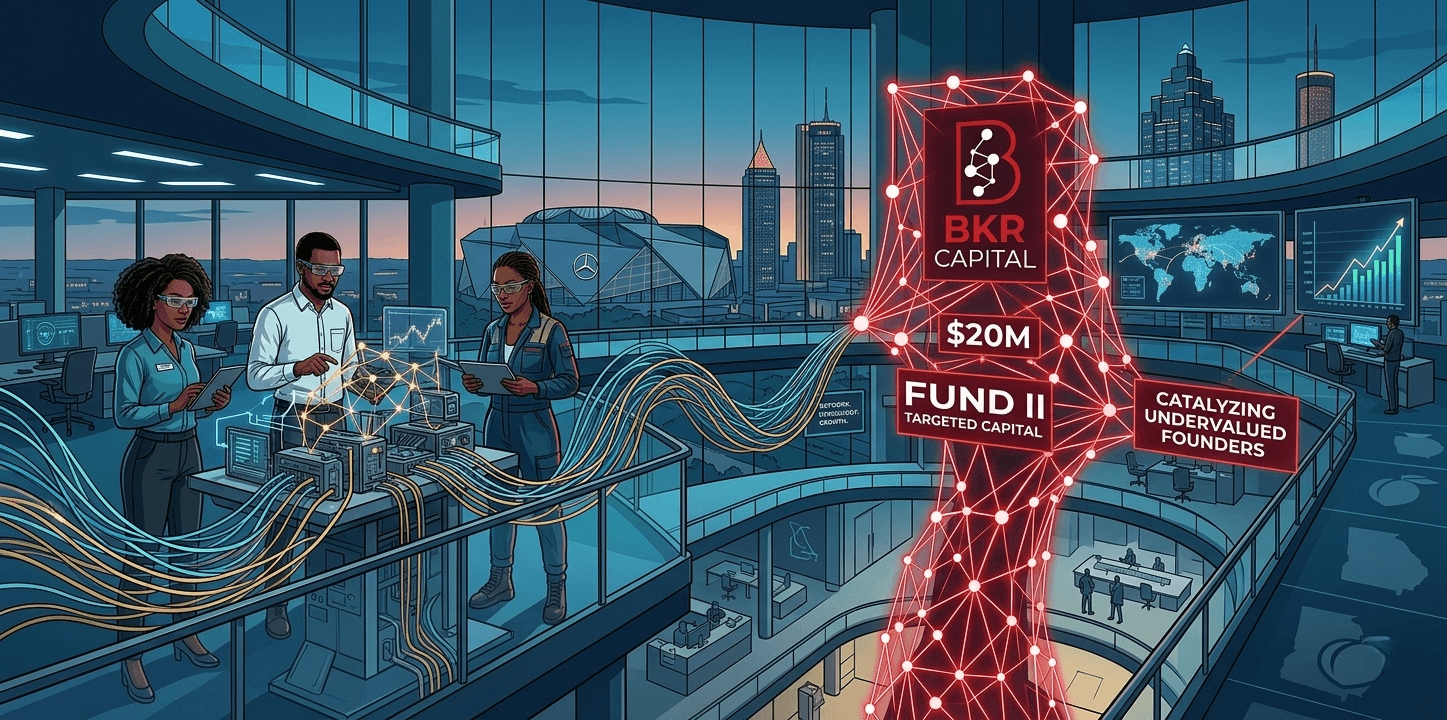
BKR Capital has officially closed its Black Innovation Fund II at $20 million, giving the firm more room to lead investments in Black-led technology companies across North America. The Toronto-based venture firm, led by managing partner Lise Birikundavyi and Isaac Olowolafe, has built its identity around the idea that many Black founders remain systematically undervalued despite operating in high-growth markets.
That positioning matters at a time when funding remains especially difficult for underrepresented entrepreneurs. For Black founders, reduced access within the venture capital space is not simply a market slowdown story. It is also a visibility, network, and opportunity gap that continues to shape which startups get traction early and which ones are forced to grow under tighter constraints.
For the Georgia tech scene, that makes BKR’s expanded capacity especially relevant for diverse teams. Atlanta and the wider Peach State already play an important role in Black entrepreneurship, so a fund with a clearer institutional mandate can become more than a headline. It can become a practical source of momentum.
Why the Fund Matters Beyond Canada?
Although BKR Capital is based in Toronto, the firm’s reach goes beyond Canada. Its investment strategy and deployment suggest a broader North American view, with growing interest across the United States, particularly in the U.S. Southeast, and in ecosystems where Black entrepreneurs and founders already have strong talent networks but may still face uneven capital access.
That creates a natural point of interest for Georgia. Atlanta, in particular, has long been recognized as one of the strongest environments for Black business leadership, technical talent, and startup formation. Between Georgia Tech, the Atlanta University Center, and the region’s broader entrepreneurial base, the city offers a pipeline that many investors say they want to find but do not always fund consistently.
For the Peach State, BKR’s growing profile may matter because it introduces another capital pathway into an ecosystem that already has strong founder energy, promoting global connectivity and establishing bridges to international markets. In that sense, the firm’s expansion is not just a Canadian venture story. It also connects to the larger capital conversation shaping the Georgia tech scene.
The Investment Strategy Behind Fund II
BKR Capital Fund II is built around sectors where Black founders from the black community often bring strong market understanding but may not receive proportional venture backing. The firm’s strategy centers on areas where practical business demand and social relevance often intersect.
Its target categories include:
This focus gives the fund a clearer operating identity. Rather than spreading attention across every startup category, BKR is concentrating on sectors where founders may already understand the unmet needs of diverse communities, structural inefficiencies, or market blind spots better than traditional investors do, creating a clear structural advantage.
Fintech: including tools for underbanked communities, payments, and financial infrastructure
Health technology: particularly platforms addressing care delivery gaps and service access
That has implications for the Georgia tech scene, where fintech, health innovation, and technologies shaping the future of work already have meaningful traction. For companies across the Peach State, a fund like this could align naturally with markets Georgia knows well.
A Different Kind of Venture Positioning
One of the more important details in BKR’s strategy is that the firm aims to lead funding rounds rather than simply join them as a smaller participant. That distinction matters because lead investors often shape the credibility, visibility, and follow-on potential of an early-stage company.
The firm is also focused on the pre-seed to Series A window, which remains one of the hardest stages for many founders to navigate. This is often where companies need enough capital to prove product traction, hire selectively, and stay alive long enough to reach larger institutional investors, especially in their first investment phases. For founders without strong venture networks, that stage can be especially difficult.
This is part of why BKR Capital’s model stands out. It is not just offering capital in theory. It is positioning itself to help companies bridge one of the most fragile phases of startup growth, including those in the field of artificial intelligence.
For Peach State Tech, that makes the fund worth watching. In the Georgia tech scene, one of the biggest startup challenges is not only finding talent or building a product. It is getting enough early institutional support to stay competitive once the market becomes more demanding.
What This Could Mean for Georgia Tech Scene
The relevance to Georgia becomes clearer when you look at the state’s broader founder landscape. Atlanta already serves as a major hub for Black tech talent, and local initiatives such as Collab Capital have helped strengthen the conversation around more equitable access to funding and support. BKR Capital adds another layer to that picture by bringing a wider geographic footprint and a more explicitly institutional fund structure, particularly with guidance from senior director positions or a seat on a startup's board of directors.
That does not mean every Georgia founder suddenly has easier access to capital. Venture remains selective, and market conditions are still difficult. But it does mean there may be more pathways for founders building in sectors that align with BKR’s priorities, especially if those companies are looking for investors who understand both the opportunity and the structural barriers involved in creating a more inclusive business ecosystem.
For the Peach State, that matters because long-term startup growth depends on more than talent alone. It also depends on whether founders can find capital partners willing to invest early enough, and seriously enough, to help them scale by acting as an active investor or joining an advisory board.
Why BKR Capital’s Timing Matters
The timing of Fund II is also important. It arrives during a period when diversity-focused investment strategies are facing more scrutiny, and when legal and political pressure around race-conscious programs has made some firms more cautious. Against that backdrop, BKR Capital’s successful fundraising signals that at least some institutional investors still see strong commercial potential in a focused strategy around undervalued founders.
That makes the fund relevant beyond its own portfolio in the context of digital transformation. It becomes part of a larger test around whether specialized venture firms can outperform broader generalist approaches by identifying market gaps others continue to overlook.
For the Georgia tech scene, that question is especially relevant. Georgia has the founder base, technical depth, and institutional infrastructure to support more companies in this category. What often remains uneven is the flow of capital and the willingness to back those companies early, before traditional venture consensus forms around them, despite the founders' years of experience.
Why Peach State Tech Is Watching
BKR Capital Fund II matters because it sits at the intersection of capital access, founder opportunity, and regional growth. It is not a Georgia-based fund, but its strategy and stated interests make it relevant to the kinds of companies already emerging from Atlanta and the wider Peach State.
That is why Peach State Tech is paying attention. If BKR Capital succeeds in deploying capital into high-potential Black-led startups and helping them move through early-stage bottlenecks, the effects could reach well beyond its home base. For Georgia, that could mean stronger connections between local talent and institutional capital at a time when the Georgia tech scene continues to expand.
What Comes Next
Still, the fund’s closing already says something important. It shows that focused capital strategies aimed at overlooked founders are still very much in play, even in a more selective investment climate. For startups in fintech, health tech, and education technology, that could be new possibilities.
Keep following Peach State Tech for updates on the founders, funds, and investment trends helping define the next phase of growth in the Georgia tech scene.