

How AI Pediatric Spinal Surgery Supports Better Surgical Decisions

Pediatric spinal surgery often involves treating conditions such as scoliosis and other disorders that affect the spine. During these procedures, unexpected changes can occur in a patient's condition. Quick action is often required to prevent complications, including damage that could lead to spinal cord injuries.
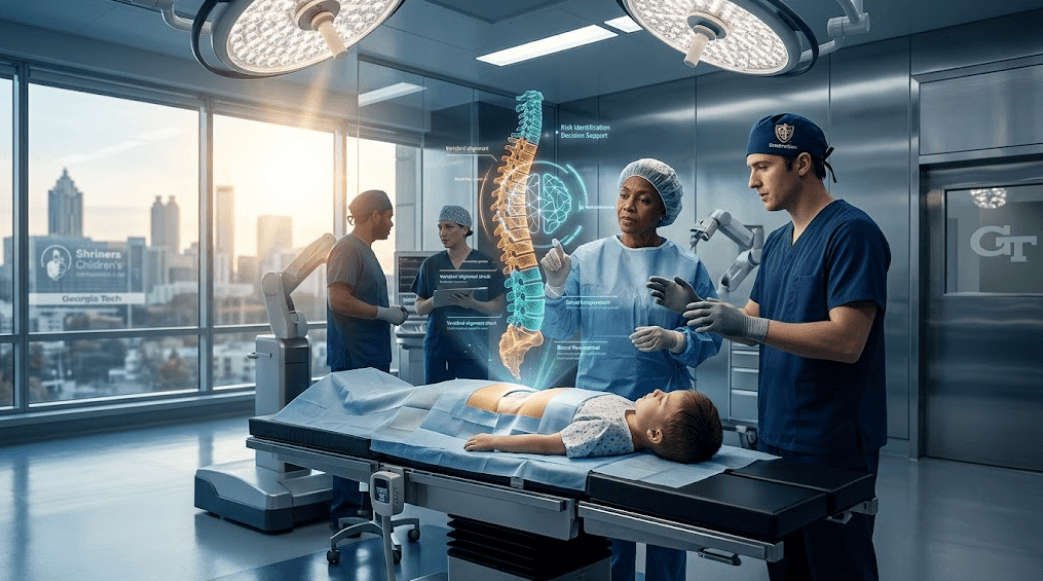
Researchers are developing a predictive system that uses predictive analytics, deep learning, and advanced algorithms to monitor patient information during surgery. The goal is to identify patterns that may signal potential problems before they occur.
The AI system analyzes several types of medical data:
- Surgical procedure records
- Clinical notes and patient histories
- Medical imaging such as X-rays
- Real-time surgical data
By reviewing thousands of data points at once, the system applies data science techniques to provide insights that may not be immediately visible to the surgical team. This added layer of analysis helps support faster and more accurate decision-making in the operating room.
Georgia Tech AI Healthcare Research Advances Medical Innovation
The collaboration highlights the growing role of Georgia Tech AI healthcare initiatives in modern medicine. The research team includes specialists from healthcare and engineering fields who are working together to improve patient safety through artificial intelligence.
One area of focus is interpretability, which refers to understanding how AI reaches its recommendations. Medical professionals must be able to trust and verify AI-generated insights before using them in clinical settings. Strong interpretability helps ensure that the technology remains transparent and useful during critical medical procedures.
Artificial intelligence and machine learning are particularly effective at finding patterns in large amounts of information. By analyzing historical cases and current patient data, the system can support healthcare providers as they make important treatment decisions. This approach strengthens pediatric medical research while helping doctors maintain full control over patient care.
Shriners Children's Atlanta Expands Pediatric Research Efforts
The partnership extends beyond a single technology project. Shriners Children's Atlanta is developing a new pediatric medical research facility in collaboration with Georgia Tech. The facility is expected to support long-term research efforts focused on improving care for children with complex medical conditions.
The expansion builds on the work already being conducted through the Shriners Children's Research Institute. Researchers, clinicians, and engineers will have opportunities to collaborate within a multidisciplinary innovation hub designed to accelerate healthcare discoveries and improve treatment methods.
Atlanta continues to attract organizations that want to advance healthcare technology. Strong academic resources, healthcare expertise, and research capabilities make the region an important center for medical innovation.
Medical AI Innovation Georgia Continues to Grow
The progress made by Shriners and Georgia Tech reflects broader medical AI innovation Georgia organizations are helping to advance. Healthcare institutions across the state are exploring new ways to use artificial intelligence to improve care delivery, increase efficiency, and support better patient outcomes.
Several factors contribute to Georgia's growing influence in healthcare technology:
- Strong medical research partnerships
- Advanced artificial intelligence development
- Access to large healthcare data sets
- Collaboration between healthcare and technology experts
Many of these efforts also have implications for public health. More accurate predictions, faster clinical decisions, and improved treatment planning can help healthcare organizations deliver better care while reducing risks for patients.
What AI in Pediatric Spinal Surgery Means for the Future of Healthcare
As healthcare technology continues to evolve, AI pediatric spinal surgery demonstrates how artificial intelligence can provide practical support in high-risk medical environments. The collaboration between Shriners Children's and Georgia Tech shows how advanced research, predictive analytics, and clinical expertise can work together to improve patient safety and strengthen the future of pediatric care.
Organizations across Georgia are finding new ways to apply artificial intelligence to complex operational and technical challenges. Peach State Tech provides AI consulting for businesses Atlanta organizations can use to evaluate opportunities, implement responsible AI strategies, and support long-term growth. Through specialized AI consulting Georgia services, businesses can develop practical solutions that align technology investments with operational goals.