

What Happened With Sora
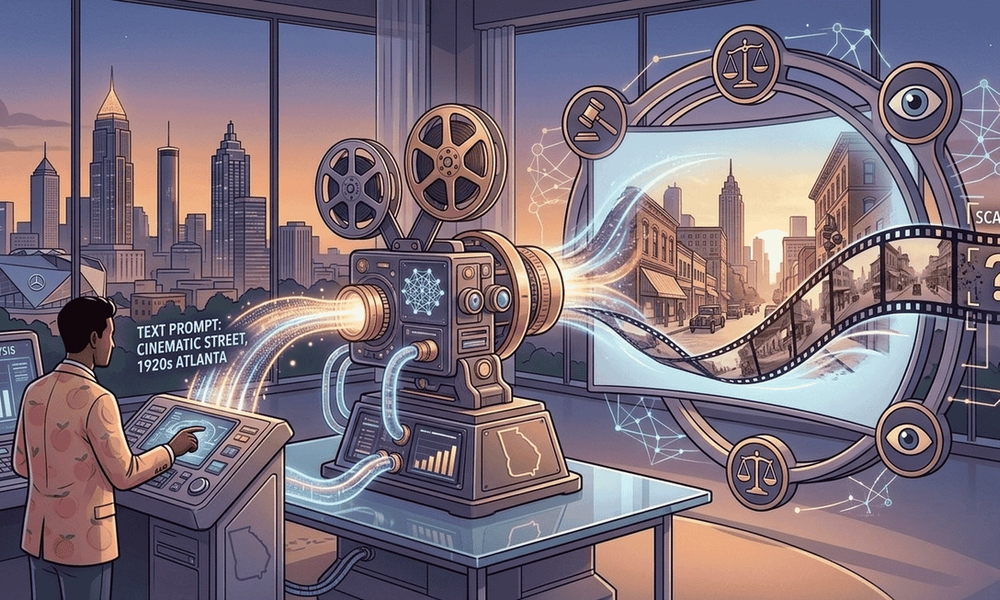
OpenAI’s Sora drew attention because it appeared to push text-to-video quality forward in a way earlier tools had not. Turning text prompts into cinematic-looking clips, it gave audiences a closer look at how rapidly machine learning and deep learning systems are improving in visual media. Compared with earlier tools, Sora seemed better at motion, scene composition, and maintaining coherence over longer sequences. By generating highly realistic short videos, the Sora app captured the imagination of both tech enthusiasts and traditional filmmakers.
Still, the Sora video app shutdown narrative reflects a larger shift in how these products are being judged. It is no longer enough for a model to look impressive in short demos. Companies now have to prove that their technology can scale economically, hold up under scrutiny from creators, and operate without triggering major legal disputes. The broader artificial intelligence community is watching closely as OpenAI navigates these complex operational hurdles.
The Three Forces That Made a Consumer AI Video App Hard to Sustain
1) Legal pressure and copyright risk are now central business issues
One of the biggest problems facing AI video tools is the question of where training data comes from and whether those assets were used with permission. In the case of Sora, that concern became especially relevant because of the potential overlap between generated content and material owned by major studios, publishers, and professional creators. Furthermore, regulators remain highly concerned about the potential for deepfakes and misinformation when photorealistic content can be generated so easily.
This is why AI video generator legal issues are now front and center in discussions about creative technology. If companies cannot clearly explain how their systems were trained, they leave themselves open to criticism, regulatory scrutiny, and possible legal action. In entertainment, where ownership and licensing are foundational, uncertainty around intellectual property can stop adoption before a tool ever becomes standard. Protecting the rights of creators has sparked numerous legal challenges regarding IP across the generative media landscape.
That concern matters even more in Hollywood, where rights holders have both the incentive and the resources to challenge products they see as threatening established business models. The broader AI debate is no longer just about innovation. It is about whether the industry can build tools that creators, studios, and regulators are willing to trust.
2) Compute costs make broad rollout harder than it looks
High-end video generation is expensive. A sophisticated AI model that produces consistent motion, realistic lighting, and believable camera movement requires far more computing power than a chatbot or even a static image generator. This is one reason the OpenAI Sora shutdown story resonates beyond the product itself: it raises questions about whether premium consumer video tools are financially sustainable at scale.
Entering the premium video generation business requires an entirely different scale of infrastructure and investment compared to running text-based models like ChatGPT.
Unlike simpler media outputs, video demands massive processing across many frames while preserving continuity. That makes the economics difficult. If pricing is too low, the platform loses money. If pricing rises, adoption falls. Even with excitement around generative AI, profitability can be hard to achieve when demand for premium output remains expensive to serve.
This is also why companies may increasingly favor controlled deployment inside larger ecosystems rather than public-facing standalone products. Instead of offering unlimited access, they can fold video tools into existing subscriptions and narrow them to carefully managed use cases.
3) Production-grade quality is still a major hurdle
The gap between an eye-catching demo and real production value remains significant. Even if Sora videos look compelling online, professional environments require far more consistency than social media audiences expect. In commercial production, small visual errors become costly problems.
That matters to editors, agencies, and filmmakers who need predictable outputs they can actually use in professional workflows. For all the progress made by generative AI models, common issues still include shifting details between frames, unstable motion, and visual inconsistencies that make a clip feel unfinished. These flaws are not minor when the output is meant for branded campaigns, entertainment, or client work.
Georgia’s film and media sectors understand this better than most. The standard on professional sets is not whether a tool feels futuristic. It is whether it is reliable enough to support real production tasks without introducing legal or creative risk.
Why This Matters for Georgia’s Film Industry
The Georgia film industry AI conversation is becoming more urgent as new tools promise faster content creation, lower costs, and new forms of creative experimentation. But Georgia is not just observing these changes from afar. It is one of the country’s most important production centers, with studios, agencies, and creative businesses that have real stakes in how AI develops.
The OpenAI Sora shutdown offers a useful signal for that community. It suggests that the path forward for generative video will likely be slower, narrower, and more regulated than many expected. Tools may still help with ideation, early concept work, and internal experimentation, but that does not mean they are ready to replace trusted workflows in high-value production environments.
For studios and agencies across the state, the lesson is practical: do not build your future around a closed platform unless you understand the technical, financial, and legal risks behind it. This is especially important in markets connected to Hollywood, where content ownership and brand protection shape every decision.
The Business Lesson: Innovation Without Trust Does Not Scale
The OpenAI Sora shutdown is not just about one company changing direction. It reflects a broader reality in generative AI: innovation alone is not enough. The tools that survive will be the ones that can prove their outputs are useful, their economics are sustainable, and their development practices can withstand scrutiny.
That is where the conversation around intellectual property, transparency, and licensing becomes strategic rather than theoretical. If startups in Georgia want to build in this space, they may find stronger opportunities in narrow, partnership-driven products than in trying to compete head-on with the biggest players. Specialized tools for pre-production, creative planning, or workflow support may offer a more durable path than general-purpose consumer video apps. Ultimately, adopting these new technologies will require a spirit of constructive collaboration between software developers and traditional creative agencies.
This also creates space for competitors and alternatives to gain attention. Products like Google Veo, Runway, and other emerging tools may shape the next phase of the market, but the same pressure points will apply to them as well. The winners will not just have better output. They will have clearer rules, stronger partnerships, and more defensible business models.
What Georgia Businesses Should Do Now
For creative teams, studios, and startups watching these developments, there are a few practical takeaways:
- Audit where you rely on third-party AI tools.
- Review how those platforms handle rights, licensing, and output ownership.
- Use generative systems first for lower-risk experimentation, not core deliverables.
- Make sure clients understand where AI was used and why.
- Treat legal review as part of product and creative strategy, not an afterthought.
That approach is especially important as the Sora video app shutdown becomes a reference point in broader debates about responsible AI deployment. Businesses that move carefully now will be better positioned when the next generation of tools becomes more stable.
What the OpenAI Sora Shutdown Means for Users and the Industry
As interest around the OpenAI Sora shutdown grows, several common questions are emerging. While not all details have been publicly confirmed, here’s what businesses and creators should understand right now.
When will OpenAI Sora officially stop working?
There has been no universally confirmed public timeline for a full shutdown or deprecation of Sora as a product. Much of the discussion points to a strategic pullback rather than a hard cutoff date.
In practice, this likely means:
- Limited or controlled access instead of broad availability
- Gradual phase-out of standalone features
- Continued development of the underlying AI model within other OpenAI products
For users, the key takeaway is that access may become more restricted over time rather than ending all at once.
What happens to videos created with OpenAI Sora after the shutdown?
In most AI platforms, previously generated assets remain accessible to users, but usage rights depend on platform terms. For Sora-generated content, this raises important considerations:
- Ownership and licensing terms may still apply
- Commercial usage rights may be unclear in some cases
- Future access to stored assets could depend on platform availability
Because of ongoing AI video generator legal issues and intellectual property concerns, businesses should review how and where their generated content is stored—and whether they have the right to continue using it.
Was OpenAI’s Disney deal affected by the Sora shutdown?
There is no confirmed evidence that a specific deal between OpenAI and Disney was directly impacted by the Sora situation. However, the broader dynamic between AI companies and major studios like Disney is clearly evolving.
Any prospective partnership with the Walt Disney Company would be incredibly complex, given how fiercely the entertainment giant protects its legacy assets and characters. Studios across Hollywood are increasingly cautious about:
- How AI systems are trained
- Whether copyrighted material is used without permission
- How generated outputs might compete with or replicate existing content
This growing scrutiny is part of the same pressure shaping decisions around tools like Sora.
Is OpenAI planning to replace Sora with a new app?
Rather than launching a direct replacement, OpenAI appears more likely to integrate video capabilities into existing platforms.
This approach aligns with broader industry trends:
- Embedding generative AI models into multi-purpose tools
- Managing costs through subscription-based ecosystems
- Reducing legal exposure through controlled use cases
For users, this means video generation may not disappear—but it may become a feature, not a standalone product.
Key Takeaway
The OpenAI Sora shutdown is not proof that AI video is finished. It is proof that the market is maturing. Advanced tools built on machine learning and deep learning will continue improving, but success will depend on more than raw capability. Companies must balance innovation with economics, creative expectations, and legal accountability.
For Georgia, that is the real takeaway. The future of Georgia film industry AI will not be shaped by hype alone. It will be shaped by whether these tools can earn trust from studios, creators, and filmmakers who need systems that are not only powerful but dependable.
Want more Georgia-focused insight on AI, startups, and digital innovation? Follow Peach State Tech for weekly breakdowns of the trends shaping the state’s tech and creative economy.