


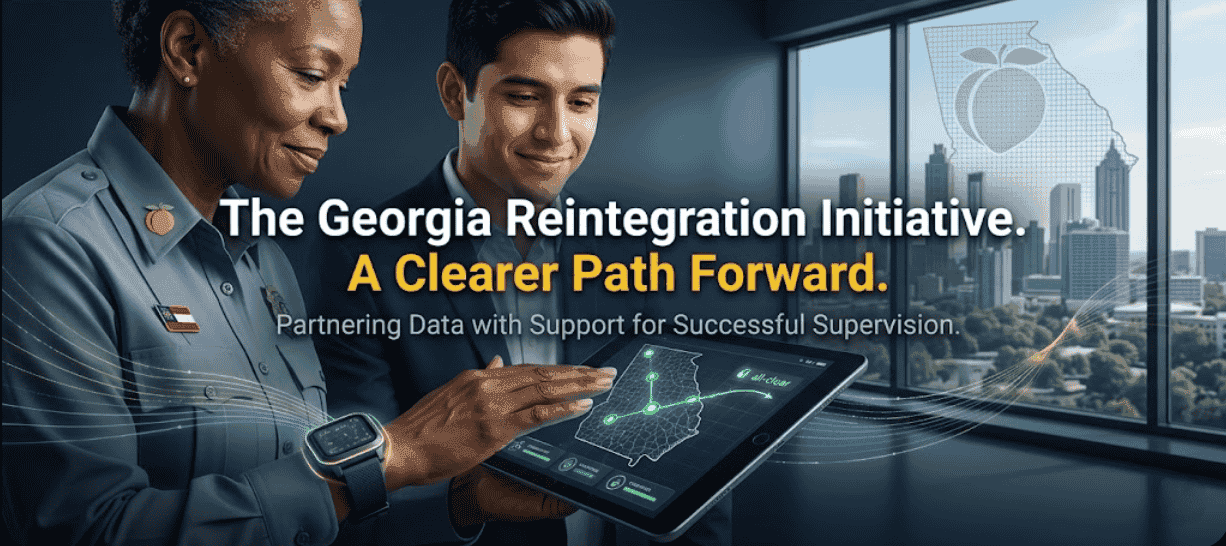
Why Community Supervision Technology Is Getting More Attention in Georgia

Across Georgia, public-sector systems are under pressure to operate with more structure, accountability, and efficiency. That pressure is especially visible in community supervision, where community corrections agencies and community supervision agencies manage large caseloads, evolving compliance requirements, and increasing expectations around public safety.
Older systems often rely on fragmented processes, limited case information, and manual coordination of routine tasks. These gaps make it harder for probation and parole officers to maintain consistent oversight and deliver effective supervision across the criminal justice system.
As a result, there is growing interest in community supervision technology that can bring together case management, electronic monitoring, and real-time visibility into a more unified operational model.
What makes community supervision technology different from older monitoring systems?
Traditional approaches focused heavily on hardware, particularly electronic monitoring devices. While those tools still matter, the category is now expanding to include digital tools, modern tools, and integrated case management software that support full workflows for the supervision of individuals rather than isolated tracking functions.
This shift reflects a broader understanding that supervision is not just about location tracking—it is about coordination, communication, and informed decision-making.
What Modern Community Supervision Actually Requires
Modern community supervision technology is increasingly defined by how well it supports day-to-day operations. That includes:
Centralized case management and structured case information
Real-time alerts and remote supervision capabilities
Integration of data analytics and the power of data to guide decisions, including accurate risk assessment
Strong data security practices for protecting sensitive information across the public sector
Scalable supervision strategies that adapt to different caseloads
These capabilities are critical for community corrections environments where agencies must balance compliance, workload efficiency, and long-term outcomes such as reduced recidivism rates.
Are there challenges in adopting technology for community supervision?
While community supervision technology is advancing quickly, adoption across agencies is not always seamless. Many public-sector organizations face structural, operational, and cultural barriers that can slow the rollout of community supervision technology in practice.
- Integration with legacy systems
Many agencies still operate on older platforms that were not built to connect with modern supervision software or digital tools. This often leads to data silos, limited real-time visibility, and added complexity in day-to-day workflows. - Training and change management
Probation officers and community supervision professionals are already managing large caseloads, leaving little time to learn new systems. Without consistent onboarding and support, even well-designed community supervision technology may see limited adoption in actual supervision workflows. - Budget and procurement constraints
Public-sector adoption typically involves long approval cycles, strict compliance requirements, and limited funding flexibility. These factors can delay implementation or limit how broadly new systems are deployed. - Data security and privacy requirements
Because supervision involves sensitive personal and legal information, agencies must ensure that any system meets strict security standards and aligns with regulatory expectations across the criminal justice system.
Despite these challenges, the direction is clear. Agencies continue to move toward more integrated, data-driven supervision models as the benefits, such as stronger case management, better visibility, and more consistent outcomes, become harder to ignore.
Why are supervision software and visibility becoming more important in supervision workflows?
As caseloads grow and expectations increase, agencies need more than static reports or delayed updates. They need systems that provide immediate visibility into what is happening across their supervision programs.
That is where modern tools and digital tools become essential. By improving how information is collected, shared, and acted upon, these systems help create more consistent and scalable supervision processes.
How Talitrix Fits This Shift
One Georgia-based company reflecting this broader shift is Talitrix, an Alpharetta startup focused on modernizing supervision workflows through integrated technology.
Talitrix has built its platform around real-time data, unified dashboards, and tools designed to reduce administrative friction for agencies. Rather than treating supervision as a set of disconnected tasks, the platform connects monitoring, reporting, and coordination into a more cohesive system.
This approach aligns closely with where the category is heading. By combining supervision software, electronic monitoring, and real-time visibility, Talitrix supports agencies looking to move beyond fragmented processes.
How does Talitrix reflect Georgia’s public-sector innovation story?
Talitrix’s growth highlights a broader trend: Georgia startups are increasingly building solutions for complex, operationally demanding environments—not just consumer or enterprise markets.
By working closely with local agencies and incorporating feedback from probation officers and administrators, the company reflects how the development of tools in this space is becoming more grounded in real-world use cases.
Why This Matters Beyond One Company
The growing focus on community supervision technology is not just about one startup or one product category. It reflects a wider shift in how Georgia approaches operational systems across the public sector.
As agencies look to improve public safety, reduce recidivism rates, and support more positive outcomes within the criminal justice system, the role of technology becomes more central. This includes not only tools, but also better processes, stronger coordination, and more consistent execution.
For Peach State Tech readers, this is part of a larger pattern. Georgia’s innovation ecosystem is expanding into areas that require deep operational understanding, not just technical capability. Whether it is workforce policy, infrastructure, or public-sector systems—as seen in initiatives like sewage into electricity—the state is increasingly focused on building solutions that address real structural challenges.
Is community supervision technology only about tracking?
Not anymore. While tracking remains one component, the category is evolving into a broader system of case management, data analytics, and coordinated supervision workflows.
That evolution is what makes this space more relevant today—and why Georgia is paying closer attention.
What This Means for Georgia Agencies and Operators
For Georgia agencies and operators, the rise of community supervision technology is really about improving how supervision works in practice. As caseloads grow and expectations around public safety increase, agencies need stronger case management, clearer case information, and more reliable supervision strategies.
For probation officers, community supervision professionals, and frontline teams, that means better access to digital tools, remote supervision, and real-time insights that reduce friction and support more consistent decisions. It also raises the importance of officer training, since better systems only matter if teams can use them effectively.
The Bigger Picture for Georgia’s Tech Ecosystem
Technology does not always draw attention because it is visible. In many cases, its importance comes from how effectively it improves systems behind the scenes.
Community supervision technology is becoming one of those categories in Georgia. As agencies adopt more structured, data-driven approaches, and as companies like Talitrix continue to build within the state, this space is likely to play a larger role in the conversation around public-sector innovation.
Georgia’s most important tech stories are often the ones reshaping how complex systems actually function. Discover more Peach State Tech coverage on the companies and technologies redefining how the state operates.